
How To Learn Spanish For Free
📖 Table of Contents
- Start with Free Spanish Learning Apps
- Leverage YouTube for Free Spanish Lessons
- Use Spanish Learning Websites for Structured Practice
- Incorporate Spanish into Everyday Routines
- Join Free Online Spanish Communities
- Explore Free Spanish Books and Audiobooks
- Use Spanish Learning Games and Puzzles
- Make It Your Way
- Frequently Asked Questions
I remember the first time my son said 'hola' in Spanish — it was during a grocery trip, and he was asking for a chocolate bar. I felt a rush of pride, but also a hint of anxiety. Would I be able to keep up with his language learning journey? I had no idea that learning Spanish for free could be this accessible and effective. That experience taught me that learning a language doesn't need to be expensive or complicated, and that's what I want to share with you.[1]
When I started looking into how to learn Spanish for free, I was overwhelmed by the sheer number of options. There were apps, YouTube channels, and even free online courses — but I didn’t know where to begin. I wanted something that would be fun for my kids, easy to use, and above all, free. That’s when I discovered a few tools that not only worked for us but also turned language learning into a joyful, everyday part of our lives.[2]
Now, our family speaks Spanish at home, and we all enjoy the process. I’ve learned that learning Spanish for free is not only possible but also deeply rewarding when you approach it with the right tools and mindset. If you’re wondering how to learn Spanish for free, you’re not alone — and I’m here to guide you through every step of the way.
Why You'll Love This Language Learning Journey
- You’ll save money by using only free resources.
- You’ll make language learning a fun and interactive part of your daily life.
- You’ll build a strong foundation in Spanish through consistent, short practice sessions.
- You’ll be able to enjoy learning with your family, making it a shared and joyful experience.
Start with Free Spanish Learning Apps
As of September 2026, Duolingo is a great place to start because it breaks down Spanish into short, gamified lessons that are easy to fit into a busy schedule. My son, who is six, enjoys the rewards system and the colorful visuals. Each day, he gets a few minutes of learning, and over time, he’s picked up vocabulary and basic grammar.
Memrise is another powerful tool that uses spaced repetition and mnemonic devices to help you remember new words and phrases. I’ve found that it’s especially useful for memorizing vocabulary because of the way it reinforces learning over time. Both of these apps are completely free, and they offer a solid introduction to Spanish.
The best part about using these apps is that they’re accessible on both phones and computers. This means that you can learn Spanish for free on the go, whether you’re waiting in the car or sitting at the kitchen table. My family has made it a habit to use these apps for 10 minutes a day, and it’s made a noticeable difference.[3]
Many free apps have a ‘streak’ feature that keeps you motivated. Try to keep your streak going for at least a week — you’ll be surprised at how quickly you learn.
Part of our Teaching a foreign language course for beginners guide.
Leverage YouTube for Free Spanish Lessons
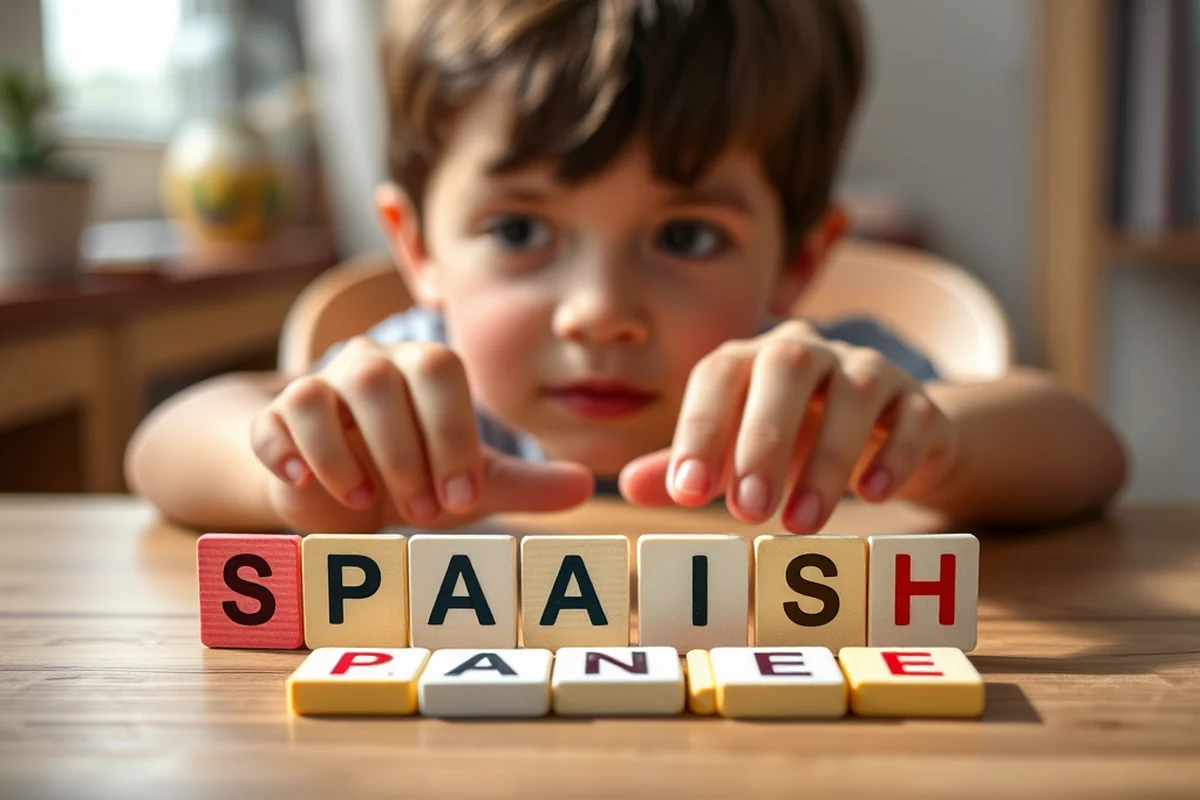
YouTube has a ton of free Spanish lessons, and I’ve found that some of the most useful ones are from native Spanish speakers. Channels like 'SpanishPod101' and 'Easy Spanish' offer a variety of content, from beginner lessons to advanced grammar tips. These videos are structured in a way that makes learning feel like a casual conversation.
What I love about YouTube is that you can watch a lesson in one sitting or pause and come back to it later. This flexibility is especially helpful if you have a busy schedule. I’ve found that my daughter enjoys watching short videos that are filled with songs and rhymes, which helps her absorb vocabulary without even realizing it.
Another great thing about YouTube is that it’s free to access. All you need is an internet connection, and you can start learning Spanish right away. I’ve watched entire lessons with my kids, and it’s become a regular part of our evening routine.
YouTube turned learning Spanish into an afternoon of fun for my family.
Related: Teaching foreign language certificate comparison
Use Spanish Learning Websites for Structured Practice
Quizlet is a fantastic resource for learning Spanish because it lets you create flashcards and practice with interactive quizzes. I’ve used it to create flashcards for my son’s vocabulary, and he loves the games that come with it. The flashcards are easy to customize, so you can tailor them to your child’s interests.
SpanishDict is another valuable website that provides free grammar lessons, verb conjugation guides, and even a dictionary. I’ve found it especially useful for understanding the nuances of Spanish, such as when to use the subjunctive mood. It’s a great tool for parents who want to understand the language better so they can support their children’s learning.
Both Quizlet and SpanishDict are free to use, and they offer a structured way to practice Spanish. I’ve made it a point to use these websites a few times a week, and it’s helped me improve my own language skills while also assisting my kids.
Use Quizlet to create flashcards around your child's favorite topics, like animals or food. This makes learning feel more personal and engaging for them.
“I remember the first time my son said 'hola' in Spanish — it was during a grocery trip, and he was asking for a chocolate…”— Teaching Foreign Languages at Home editors
Related: How to learning english speaking
Incorporate Spanish into Everyday Routines
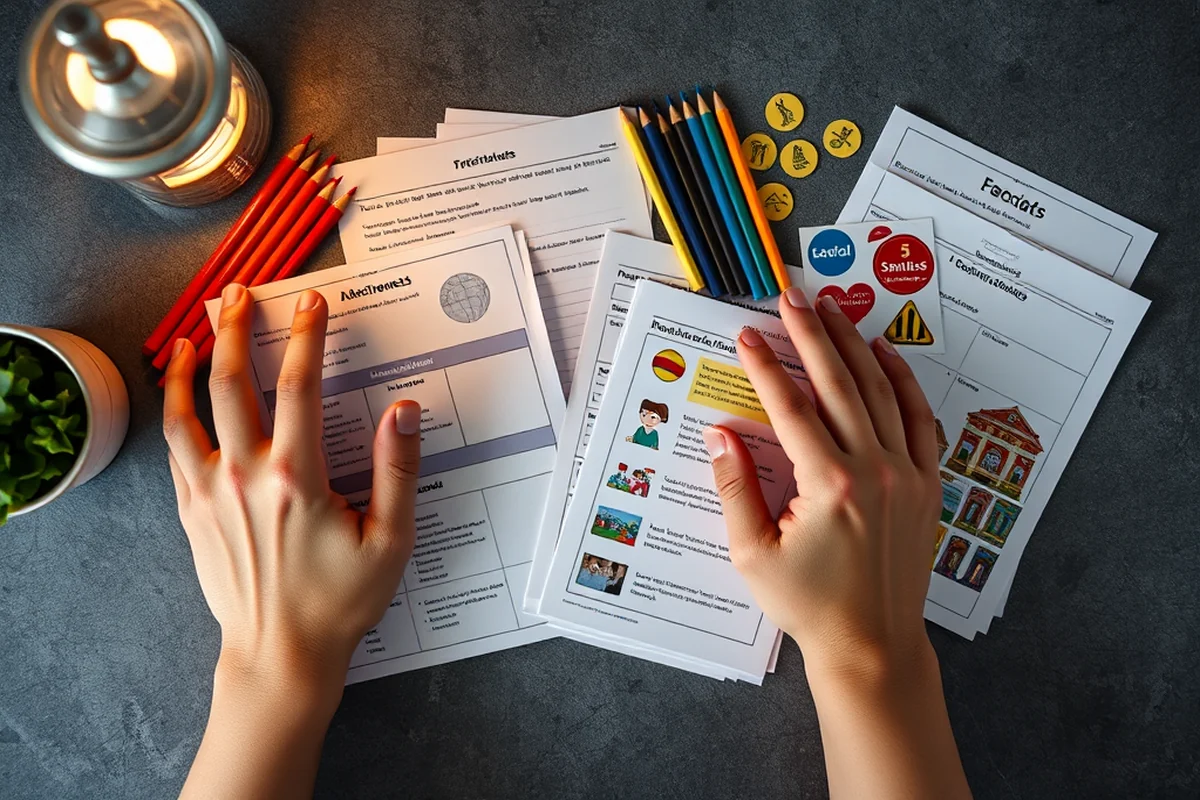
One of the most effective ways to learn Spanish for free is to bring it into your everyday life. I’ve started using Spanish for simple tasks, like counting to 10 at the dinner table or saying 'buenos días' when my kids wake up. These small moments make the language feel more familiar and less intimidating.[4]
I’ve also found that using Spanish during playtime is a great way to reinforce vocabulary. For example, when we play with building blocks, I say 'rojo' for red and 'azul' for blue. This repetition helps my kids remember the words without even realizing they’re learning.
By making Spanish a part of our daily lives, my children have become more comfortable with the language. They now use simple phrases on their own, and it’s been a wonderful way to connect with them while learning together.
Related: English speaking course for beginners
Join Free Online Spanish Communities
There are a number of free online communities where people are learning Spanish, and I’ve found them to be a great source of encouragement and advice. Sites like Reddit and Facebook have groups dedicated to language learning, and they’re full of people who are just as passionate about learning Spanish as I am.
I’ve been part of a few Facebook groups where people post daily challenges, share learning tips, and even practice speaking with each other. These communities are a great way to stay motivated and get help when you’re stuck on a particular lesson or phrase.
One of the things I love about these online communities is that they’re inclusive and welcoming to people of all ages and skill levels. I’ve met parents, teachers, and even kids who are learning Spanish, and it’s been a great way to exchange ideas and support each other.
Related: English learning course for beginners
Explore Free Spanish Books and Audiobooks
I’ve discovered that free Spanish books and audiobooks are a great way to improve listening skills and expand vocabulary. There are several websites that offer free downloadable books, like Project Gutenberg and Open Library. These books come in a range of difficulty levels, so you can choose one that’s appropriate for your child’s age and skill level.
Audiobooks are especially useful for younger learners because they help them develop pronunciation and listening skills. I’ve found that listening to a Spanish audiobook while cooking or doing chores is a great way to practice without feeling like it’s a chore. It’s a fun and effortless way to learn Spanish for free.
I’ve used audiobooks with my kids, and they’ve loved listening to simple stories in Spanish. It’s a great way to expose them to the language in a natural, engaging way, and I’ve noticed that they’ve picked up new phrases and vocabulary just by listening.
Audiobooks turned our daily tasks into learning opportunities.
Related: Best teaching foreign language certificate
Use Spanish Learning Games and Puzzles
Learning Spanish through games and puzzles is a great way to keep kids engaged and motivated. I’ve found that online games like ABCmouse and Funbrain offer a variety of Spanish learning activities that are both educational and entertaining. These games make learning feel like a challenge, and my kids love the competitive element.
I’ve also used printable Spanish puzzles and crosswords to reinforce vocabulary. These are easy to find online and can be printed for free. My son enjoys solving these puzzles during snack time, and it’s a great way for him to practice without feeling like he’s studying.
One of the best things about using games and puzzles is that they keep learning fun and interactive. I’ve seen my kids become more confident in their Spanish skills just by playing these games, and it’s made learning feel less like a chore and more like a game.
👧 Younger Kids
Use songs, stories, and interactive games to teach basic vocabulary and pronunciation.
👦 Older Kids
Introduce grammar lessons and more advanced vocabulary using apps and online courses.
📚 No-Prep
Use free YouTube lessons and audiobooks to teach Spanish without any preparation.
👨👩👧👦 Group Version
Create a language learning group with other families to practice together and share resources.
🚀 Extension
Add online communities and interactive games to deepen learning and practice conversation skills.
| The mistake | Why it happens | The fix |
|---|---|---|
| Relying too much on one method | Depending on just one resource can limit your learning and make it easier to get bored or lose motivation. | Use a mix of apps, videos, books, and games to keep your learning dynamic and engaging. |
| Learning in isolation | Learning Spanish in isolation can make it harder to practice speaking and listening skills. | Join online communities or find a language partner to practice speaking and listening with others. |
| Trying to learn too quickly | Trying to learn Spanish too quickly can lead to frustration and burnout, especially for younger learners. | Start slowly and consistently, focusing on small, achievable goals each day. |
| Ignoring pronunciation | Ignoring pronunciation can make it hard to understand and be understood by native speakers. | Use audiobooks, songs, and online communities to practice pronunciation regularly. |
How To Learn Spanish For Free
Common Questions
Can I learn Spanish for free without any apps?
How long does it take to learn basic Spanish for free?
Are there any free Spanish learning resources for kids?
Can I use Spanish learning resources with my whole family?
References
- Using Text Messaging for Communicable Disease Follow-up at ... (dhs.wisconsin.gov)
- Scam/Fraud Alerts | Department of Revenue - Colorado DMV (dmv.colorado.gov)
- Best Spanish Apps for Learning - Kent State University (kent.edu)
- Special Education for Families | Virginia Department of Education (doe.virginia.gov)
Cite this guide
Teaching Foreign Languages at Home (2026). How To Learn Spanish For Free. https://fluentathome.com/how-to-learn-spanish-for-free/
Feel free to cite or share this guide.