
What Many Countries Speak Spanish
📖 Table of Contents
Last summer, my son asked, 'Mama, why do so many people speak Spanish in places we've never been?' I paused, realizing how much I didn't know about the linguistic geography of the world. That question sparked a journey of discovery, and I've since learned that Spanish is not just a language of Spain—it's the heartbeat of many countries across the Americas, Africa, and Europe. Today, I'm excited to share what I've learned about the countries where Spanish is spoken, and why it's such an important language to teach at home.
In my own experience, learning Spanish has been more than an academic endeavor—it's been a cultural window into the lives of millions. I remember the first time I heard a song in Spanish on the radio; it felt like listening to a distant relative singing. My curiosity grew, and I wanted to know which countries share that same linguistic heritage. That led me to explore maps, books, and even travel guides to uncover the global reach of the Spanish language.
Now, I see Spanish not just as a language but as a bridge to understanding diverse cultures and histories. Countries like Mexico, Colombia, and Argentina, as well as smaller ones like Paraguay and Equatorial Guinea, have Spanish as their official language. Knowing this has helped me create a more inclusive environment at home, where my children can learn about the world from the comfort of their own living room. That's why I'm writing this article—to help you discover the countries where Spanish is spoken and how you can start learning it together.
Why You'll Love This Article
- Discover the countries where Spanish is spoken with rich cultural context.
- Find practical tips on how to teach Spanish at home, even with no prior experience.
- Explore how learning Spanish can open up new educational and travel opportunities.
- Get a clear, research-backed overview of the global impact of the Spanish language.
The Countries That Speak Spanish
As of October 2026, Spanish is spoken across a vast geographical area, from the Iberian Peninsula in Europe to the southern tip of South America. The language has deep roots in the history of the Spanish Empire, which once stretched across the Americas, Africa, and Asia. Today, it's the most widely spoken language in the Americas and the second most spoken language in the world.
In Latin America, Spanish is the official language in countries like Colombia, Peru, and Chile. In Spain, it's the primary language of the Iberian Peninsula, though it has regional dialects and variations. Beyond the Americas and Europe, Spanish is also spoken in parts of Africa, such as Equatorial Guinea and Western Sahara, where it was introduced during the colonial period.
The number of Spanish speakers continues to grow, especially in countries where it's a second language. In the United States, for example, over 40 million people speak Spanish at home. This widespread use makes Spanish one of the most important languages for global communication.[1]
Print or display a world map and mark the countries where Spanish is spoken. This visual aid can help children see the global reach of the language and spark curiosity about different cultures.
Part of our Teaching foreign languages guide.
Why Spanish is a Popular Language to Learn
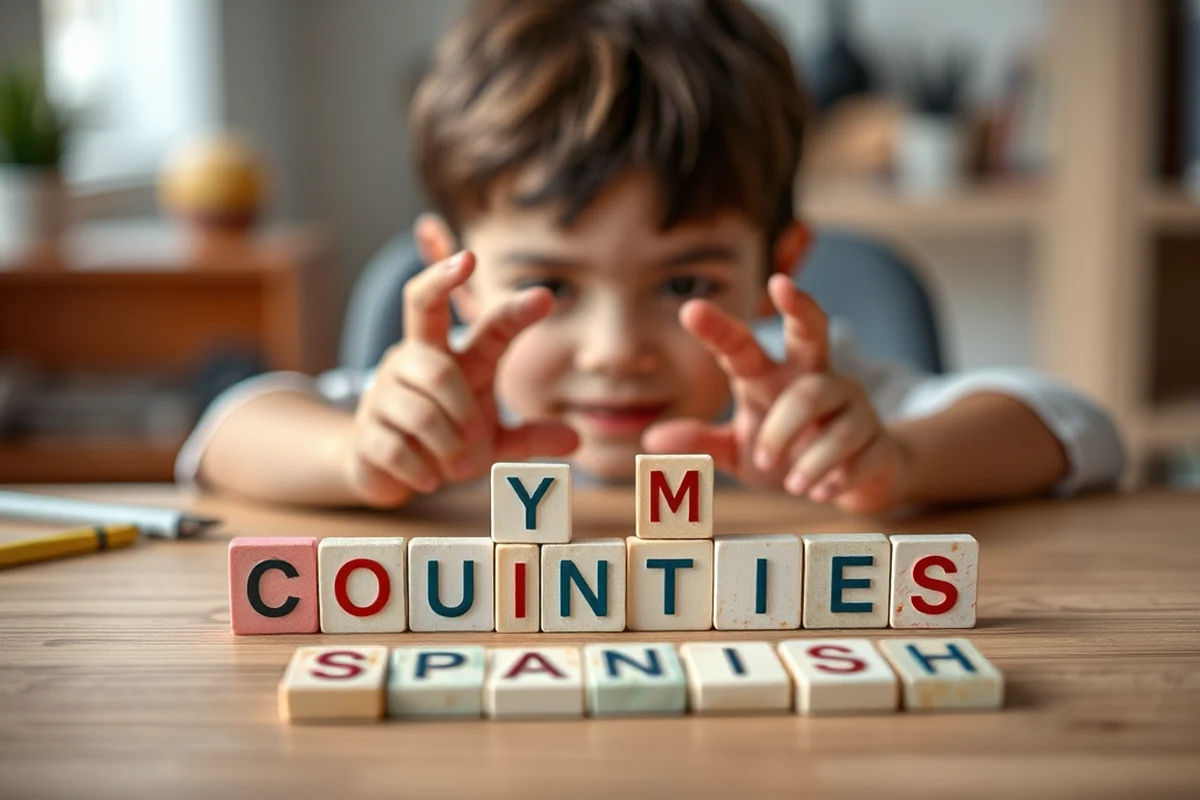
Spanish is the second most spoken language in the world, with over 500 million speakers. This makes it an excellent choice for anyone looking to communicate with a large and diverse population. Learning Spanish can open doors to new opportunities, whether in education, travel, or business.[2]
In addition to its global reach, Spanish is known for its friendly and expressive nature. Many Spanish speakers are proud of their language, and they often welcome others who are learning it. This makes Spanish a welcoming language for beginners and a great way to connect with people from around the world.
Learning Spanish can also be a fun and rewarding experience. From learning to sing songs in Spanish to reading stories in the language, there are many ways to make the learning process enjoyable and engaging for children and adults alike.
Spanish is not just a language—it's a way to connect with millions of people around the world.
Related: Meet in spanish
How to Start Teaching Spanish at Home
If you're new to teaching Spanish, start with basic vocabulary that's relevant to your child's daily life. Words like 'hello,' 'thank you,' and 'goodbye' are a great place to begin. You can use flashcards, picture books, or even simple toys to help your child learn these words.
Incorporate Spanish into your daily routine by speaking it during meals, playtime, and bedtime stories. The more your child hears Spanish, the more likely they are to pick it up naturally. You can also use music and videos to make learning more enjoyable.
As your child becomes more comfortable with basic vocabulary, you can introduce simple sentences and phrases. This will help them develop their listening and speaking skills. Remember, consistency is key when teaching a new language at home.
Incorporate Spanish into your daily routine by using it during meals, playtime, and bedtime stories. The more your child hears Spanish, the more likely they are to pick it up naturally.
“Last summer, my son asked, 'Mama, why do so many people speak Spanish in places we've never been?' I paused, realizing how much I didn't…”— Teaching Foreign Languages at Home editors
Related: What place is spanish
The Benefits of Learning Spanish at Home
Learning a second language at home can improve your child's cognitive abilities, including memory, problem-solving, and creativity. Studies have shown that bilingual children often have better attention spans and are more successful in school.[3]
In addition to cognitive benefits, learning Spanish can also help your child develop a deeper appreciation for different cultures. Spanish is spoken in many countries with rich traditions, music, and art. Exposure to these cultures can broaden your child's worldview and increase their empathy.
Learning Spanish at home can also be a valuable skill for the future. As the demand for bilingual individuals grows, knowing Spanish can open up new opportunities in education, travel, and career. Many colleges and universities also offer scholarships for students who are fluent in Spanish.
Related: Shelf is spanish
Spanish in the Americas
In the Americas, Spanish is spoken in many countries, including Mexico, Colombia, and Argentina. It's the official language in most of these countries and is widely used in education, government, and everyday life.
In the United States, Spanish is the second most spoken language, with over 40 million speakers. This makes Spanish an important language for communication, especially in areas with large Hispanic populations. Learning Spanish can be especially beneficial for students who want to connect with their heritage or explore new opportunities.[4]
In South America, Spanish is the primary language in countries like Peru, Chile, and Brazil. Each of these countries has its own unique cultural traditions, but Spanish is the common thread that unites them. This makes Spanish a powerful tool for understanding and connecting with different parts of the world.
Related: Access to in spanish
Spanish in Europe and Africa
In Europe, Spanish is the official language of Spain, where it's spoken by over 40 million people. Spain is a country with a rich cultural heritage, and Spanish is a key part of its identity. Learning Spanish can be a great way to explore the history and traditions of this fascinating country.
In Africa, Spanish is spoken in Equatorial Guinea and Western Sahara. These countries were once part of the Spanish Empire, and Spanish remains an important language in these regions. Learning Spanish can be a valuable tool for communication and understanding in these parts of the world.
While Spanish may not be as widely spoken in Europe and Africa as it is in the Americas, it still plays an important role in these regions. Learning Spanish can help you connect with people from different cultures and expand your global perspective.
Spanish is not just a language of the Americas—it's also spoken in parts of Europe and Africa.
Related: What is a language learning app
The Future of Spanish as a Global Language
As the global population continues to grow, the number of Spanish speakers is also expected to increase. This is especially true in countries with large Hispanic populations, such as the United States and Mexico.
In the coming years, Spanish is likely to remain one of the most widely spoken languages in the world. This makes it an excellent choice for anyone looking to learn a new language and connect with people from around the world.
With the increasing number of Spanish speakers, the language is also becoming more prominent in global business, education, and technology. Learning Spanish now can give you a head start in the future.
👶 Younger Kids (Ages 3-6)
Use colorful flashcards, songs, and simple games to teach basic Spanish vocabulary.
🧑 Older Kids (Ages 7+)
Introduce more complex vocabulary and sentence structures through books, movies, and interactive apps.
📚 No-Prep Version
Use everyday objects and situations to teach Spanish naturally, without any preparation or materials.
👥 Group Version
Create a Spanish-speaking group with friends or family to practice together and make learning more social.
🌍 Extension Activity
Explore different Spanish-speaking countries through maps, music, and cultural activities to deepen your understanding of the language.
| The mistake | Why it happens | The fix |
|---|---|---|
| Not using Spanish consistently | Consistency is key when learning a new language. If you only use Spanish occasionally, it may be difficult for your child to pick it up naturally. | Make a habit of speaking Spanish in your home on a regular basis, even if it's just a few words a day. |
| Focusing too much on grammar early on | Focusing too much on grammar can make learning Spanish feel like a chore and discourage your child from speaking the language naturally. | Start with simple vocabulary and phrases, and gradually introduce grammar concepts as your child becomes more comfortable with the language. |
| Not making it fun | If learning Spanish feels too structured or boring, your child may lose interest and become discouraged. | Make learning Spanish fun by using games, songs, and interactive activities. The more enjoyable the experience, the more likely your child is to continue learning. |
| Not using Spanish in everyday life | If Spanish is only taught through books or lessons, it may be difficult for your child to practice and use the language in real life. | Incorporate Spanish into your daily routine by using it during meals, playtime, and bedtime stories. The more your child hears and uses Spanish, the more likely they are to pick it up naturally. |
What Many Countries Speak Spanish
Common Questions
What are the best ways to teach Spanish at home?
How many countries speak Spanish?
What are the benefits of learning Spanish?
How can I make learning Spanish fun for my child?
References
- Spain - United States Department of State (2017-2021.state.gov)
- Department Overview – Spanish - Carleton College (carleton.edu)
- Spanish, a Growing Global Language | ICH (cervantesobservatorio.fas.harvard.edu)
- Spanish - FIU Department of Modern Languages (dll.fiu.edu)
Cite this guide
Teaching Foreign Languages at Home (2026). What Many Countries Speak Spanish. https://fluentathome.com/what-many-countries-speak-spanish/
Feel free to cite or share this guide.