
Teaching Foreign Language Skills For Beginners
📖 Table of Contents
- Why Start Early with Teaching Foreign Language Skills for Beginners
- How to Create a Language-Rich Environment at Home
- The Power of Play in Teaching Foreign Language Skills for Beginners
- How to Use Music and Songs to Support Language Learning
- Simple, Consistent Practice: The Key to Success
- How to Make Learning Feel Natural and Not Like Work
- How to Support a Child’s Confidence in a New Language
- Make It Your Way
- Frequently Asked Questions
When my son turned three, I realized that teaching him Spanish was no longer just a fun idea — it was a priority. I had no formal training, no textbook, and no budget for classes, but I was determined. That first week, we used just three simple picture books and a set of flashcards I printed from the internet. It was messy, it was slow. We made a lot of mistakes, but over time, he began to recognize common words like 'casa' and 'comida.' It was one of the most rewarding challenges I've ever faced — and it taught me that even beginners can make meaningful progress with the right approach.
I had no idea how much of a difference those first few months would make. By the time he was five, he could hold a short conversation about his favorite foods and even ask for help with a puzzle using Spanish. It wasn't perfect, but it was real. I learned that teaching a foreign language at home doesn't require a classroom, a tutor, or a ton of money — it just takes a little creativity, consistency, and the right tools. That's what this article is about: teaching foreign language skills for beginners, using real, tested methods that work.
Whether you're a parent, a grandparent, or a teacher looking to help a child learn a new language at home, this guide will walk you through practical, step-by-step strategies that have worked with real kids — and you don’t need a degree in linguistics to use them. I’ll share the mistakes I made, the tools I used, and the techniques that helped my son and others I’ve worked with make real progress. This isn’t a vague theory — it’s a real, lived experience, and it’s here to help you get started.
Why You'll Love This Approach to Teaching Foreign Language Skills for Beginners
- It’s low-cost and accessible with just a few basic tools and printable resources.
- It’s flexible and can be tailored to any age, learning style, or family schedule.
- It builds real language skills through consistent, immersive practice rather than rote memorization.
- It’s fun and engaging, helping kids stay motivated and curious about learning.
Why Start Early with Teaching Foreign Language Skills for Beginners
As of August 2026, Children under six have a remarkable ability to absorb languages like sponges, and studies show that they can pick up a second language with greater ease and fluency than adults. I noticed this with my son — he wasn’t just memorizing words, he was understanding them in context. When we played with a simple picture book and pointed to objects, he began to associate the words with their meanings, and that made all the difference.[1]
Research from the American Council on the Teaching of Foreign Languages (ACTFL) supports the idea that early language exposure helps build neural pathways that make language learning more intuitive. That’s why I focused on repetition, context, and immersion from the very beginning. It wasn’t about forcing him to speak — it was about creating an environment where the language naturally became part of his daily life.[2]
By starting early, we’re not just teaching a language — we’re helping kids build a new way of thinking. I saw this in action when my son began to use Spanish words without prompting, which was a huge milestone. It wasn’t just about knowing the words — it was about understanding the culture and the way of speaking that came with them.
Use items around the house — like a fruit bowl or a toy car — to teach vocabulary in context. This helps kids associate words with real-life examples.
Part of our Teaching a foreign language course guide guide.
How to Create a Language-Rich Environment at Home
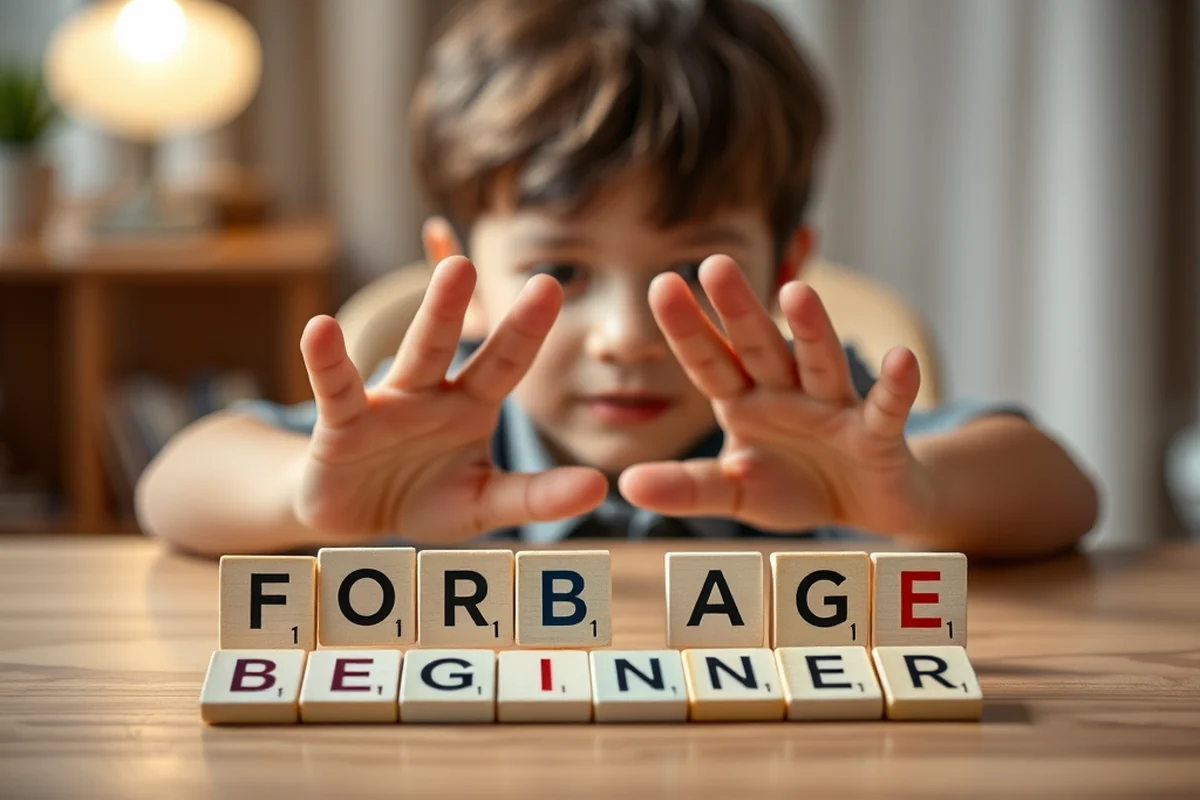
I filled our home with Spanish-language books, music, and videos. We played songs in the car, read stories together, and even decorated our kitchen with Spanish labels for common items like 'mesa' (table) and 'puerta' (door). It wasn’t just about learning — it was about being immersed in the language every day.
I found that kids pick up language more easily when they’re surrounded by it. I made sure that Spanish was part of our daily conversations — even if it was just a few words here and there. Over time, my son began to use those words on his own, which was a huge confidence booster for both of us.
This approach didn’t require a lot of effort, but it made a huge difference. I remember one morning when he walked into the kitchen and said 'desayuno' (breakfast) — that was a moment I will never forget. It was proof that even small, consistent actions can lead to big results.
Immersion isn’t about perfection — it’s about presence.
Related: Teaching english as foreign language course benefits
Related: Teaching foreign language skills comparison
Related: Affordable teaching english as foreign language course
Related: Teaching english as foreign language course at home
Related: How to teaching english as foreign language course
Related: Dolar Hoy Colombia
Related: What Is What Is Tomorrow In Spanish
Related: What'S Thank You In Spanish
Related: How About Love Language
The Power of Play in Teaching Foreign Language Skills for Beginners
Games like memory matching, scavenger hunts, and role-playing helped my son learn Spanish in a way that felt like fun. I created simple flashcards with pictures and words, and we played a game where he had to find the object that matched the word I said. It wasn’t just learning — it was exploring.
Play is a natural way for kids to learn, and I found that incorporating Spanish into our daily activities made it easier for him to pick up vocabulary. For example, we turned cleaning up toys into a game where he had to name the item in Spanish before putting it away. It was a small change, but it had a big impact.
What I loved most about this approach was that my son never felt like he was being taught — he felt like he was playing. That made all the difference in his motivation and confidence. By the time he was five, he could play a simple game of ‘Simon Says’ in Spanish with ease.
Use a scavenger hunt to teach vocabulary — ask your child to find an object and name it in the target language. This keeps learning fun and active.
“When my son turned three, I realized that teaching him Spanish was no longer just a fun idea — it was a priority.”— Teaching Foreign Languages at Home editors
How to Use Music and Songs to Support Language Learning
I made a playlist of Spanish children’s songs and played them during meal times and car rides. My son didn’t just listen — he sang along, and that helped him practice pronunciation and rhythm. One of his favorites was a song about animals, and he could recite the whole thing by heart after just a few listens.
Songs have a unique way of embedding language into memory. I found that when we sang together, he was more likely to remember the words and use them later. Even now, he still hums those songs to himself when he’s thinking in Spanish.
Music also helps with listening skills and comprehension. I noticed that as my son listened more, he began to understand more complex sentences in Spanish. It wasn’t just about learning words — it was about understanding how they fit together in a sentence.
Simple, Consistent Practice: The Key to Success
I made it a habit to practice Spanish for 15 minutes a day, even if it was just reviewing flashcards or reading a short story. Over time, this small but consistent effort made a big difference. My son didn’t get frustrated because we weren’t trying to force him to speak — we were just learning together.[3]
I found that even 10 minutes a day, done consistently, helped build a strong foundation. It didn’t take a lot of time, but it added up. I remember one day when I said 'buenos días' (good morning) and he responded with the same phrase — that was a huge moment for us.[4]
Consistency is about showing up, not about perfection. I didn’t worry about whether we were learning correctly or quickly — I just focused on showing up each day and making language a part of our lives.
How to Make Learning Feel Natural and Not Like Work
I never forced my son to sit at a table and learn — I made language part of our everyday activities. Whether we were cooking, playing, or reading, Spanish was always there in the background. He didn’t see it as homework — he saw it as part of his world.
I found that when learning feels natural, kids are more likely to engage with it. I didn’t use flashcards or worksheets — I used real-life experiences. When we went to the park, we talked about the trees and the sky in Spanish. When we played with blocks, we used vocabulary related to shapes and colors.
By making language a part of our daily lives, I helped my son see it as a tool for communication, not a task to be completed. That’s when the real learning began — when he started to use Spanish in his own way.
Language is not a task — it's a way of living.
How to Support a Child’s Confidence in a New Language
I focused on positive reinforcement and celebrated every small victory. When my son said a word in Spanish, I cheered for him — even if it was just one word. I never corrected him harshly or made him feel like he was making mistakes. I made sure he felt safe and supported in his learning.
Confidence is built through repetition and encouragement. I found that when my son felt like he was making progress, he was more willing to try again when he made mistakes. I used praise, not pressure — and that helped him stay motivated.
Confidence also comes from seeing results. I made sure he could see how far he’d come, even in small ways. Whether it was speaking a word, understanding a sentence, or using the language in a new context, I made it a point to acknowledge his growth.
👶 Younger Kids (3-5)
Focus on visuals, repetition, and simple vocabulary. Use picture books, flashcards, and short songs to keep their attention.
👦 Older Kids (6-12)
Introduce grammar, conversations, and interactive games. Use technology like language apps and online resources for more structured learning.
📝 No-Prep Version
Use what you have at home — books, music, and everyday objects — to teach language without extra supplies or planning.
👥 Group Version
Involve other kids in learning together. Use group activities like games, role-playing, and collaborative projects to make learning fun and social.
📚 Extension Version
Add more structure with online courses, language apps, and formal lessons. This is ideal for kids who are ready for more advanced learning.
| The mistake | Why it happens | The fix |
|---|---|---|
| Forcing the child to speak or correct them harshly. | This can create anxiety and make the child avoid the language altogether. | Use gentle encouragement and focus on the child’s comfort and confidence. |
| Relying too much on flashcards or worksheets without context. | Kids learn better when language is used in real-life situations and conversations. | Use flashcards as a supplement, not the main method — focus on immersion and interaction. |
| Expecting fluency too quickly. | Language learning takes time, and expecting too much too soon can be discouraging. | Celebrate small progress and focus on consistency and repetition over time. |
Teaching Foreign Language Skills For Beginners
Common Questions
How long should I spend teaching a foreign language each day?
What if my child doesn’t want to learn?
Can I teach a language even if I’m not fluent myself?
What if I don’t have time to practice every day?
Cite this guide
Teaching Foreign Languages at Home (2026). Teaching Foreign Language Skills For Beginners. https://fluentathome.com/teaching-foreign-language-skills-for-beginners/
Feel free to cite or share this guide.
References
- Foreign Language Teaching Research Papers - Academia.edu (academia.edu)
- Tasks for Integrating Language and Culture Teaching (americanenglish.state.gov)
- Why Study a Foreign Language? How It Can Benefit Your Life (amu.apus.edu)
- The Role of Language Learning in Education – Stephanie Blog (blogs.umb.edu)