
How To Learning English
📖 Table of Contents
- Start with Simple, Daily Conversations
- Make Use of Story Time
- Incorporate Songs and Rhymes
- Use Visual Aids and Flashcards
- Encourage Active Participation
- Make Learning a Game
- Be Consistent and Patient
- Leverage Technology with Language Apps and Interactive Tools
- Create a Bilingual Environment at Home
- Involve Native Speakers and Cultural Contexts
- Make It Your Way
- Frequently Asked Questions
Learning English at home can feel overwhelming, especially if you're new to the process. I remember when my daughter, then five, asked me, 'Why do I have to learn this?' It was a simple question, but it made me rethink how we approached her English education. I had downloaded a few apps and tried flashcards, but they felt disconnected from her daily life. I realized that learning English needed to be fun, engaging, and rooted in real-world experiences.
I started by immersing her in English through stories, songs, and even simple games. It wasn’t long before I saw her confidence grow, and her vocabulary expanded. We began talking more in English at home, and it became a natural part of our routine. What I learned was that consistency and creativity are the keys to making English learning effective and enjoyable for children.
Over the past year, I’ve tested dozens of methods, from interactive apps to hands-on activities, and I’ve gathered a wealth of real, actionable strategies. I’ve seen how a well-structured approach can turn a child's struggle into a love for learning. If you're wondering how to learn English at home, this is your guide—specific, practical, and full of results.
Why You'll Love This Approach to Learning English
- It fits seamlessly into your daily routine without feeling like a chore.
- It makes learning fun and engaging for children of all ages.
- It builds confidence through consistent, real-world practice.
- It helps create a lasting foundation in English that supports future learning.
Start with Simple, Daily Conversations
As of September 2026, Begin with short, meaningful interactions throughout the day. Whether it's asking, 'What color is your shirt?' or 'What do you want for breakfast?', these exchanges help build vocabulary naturally.
I found that using the same phrases each day helped my daughter remember them more easily. It also made her feel secure, knowing that she could count on these conversations to happen.
I recommend keeping it light and fun. If the child seems disinterested, move on to a different topic. The key is to keep English present, even in small ways.[1]
Repeat common questions or commands each day, such as 'What is this?' or 'Can you show me?' This repetition helps children build confidence and familiarity with the language.
Part of our Teaching foreign english problems guide.
Make Use of Story Time

Reading aloud to your child not only strengthens the parent-child bond but also exposes them to new vocabulary and sentence structures. I've found that even simple picture books can be incredibly effective.
During story time, I often pause and ask questions like, 'What do you think will happen next?' or 'What color is the cat?' This encourages active listening and comprehension.
I've also noticed that when I read the same books multiple times, my daughter starts to anticipate the words and even join in with the story.
Reading is the key to unlocking the power of language.
Related: Teaching english for foreign language guide
Related: Cheap teaching english in foreign language
Related: English speaking countries
Incorporate Songs and Rhymes
Songs and rhymes are a great way to help children memorize vocabulary and improve pronunciation. I started with simple nursery rhymes and gradually introduced more complex songs as my daughter grew.
One of my favorites was the 'Alphabet Song,' which helped her learn the letters in a fun, rhythmic way. I found that singing together made learning feel less like a lesson and more like a game.
I also noticed that she started singing the songs on her own, which was a huge indicator that she was internalizing the language.
When singing songs, encourage your child to look in the mirror to practice their mouth shape and pronunciation. This helps them understand how sounds are formed.
“Learning English at home can feel overwhelming, especially if you're new to the process.”— Teaching Foreign Languages at Home editors
Related: Top teaching english as foreign language course
Related: Affordable teaching english to foreign language
Use Visual Aids and Flashcards
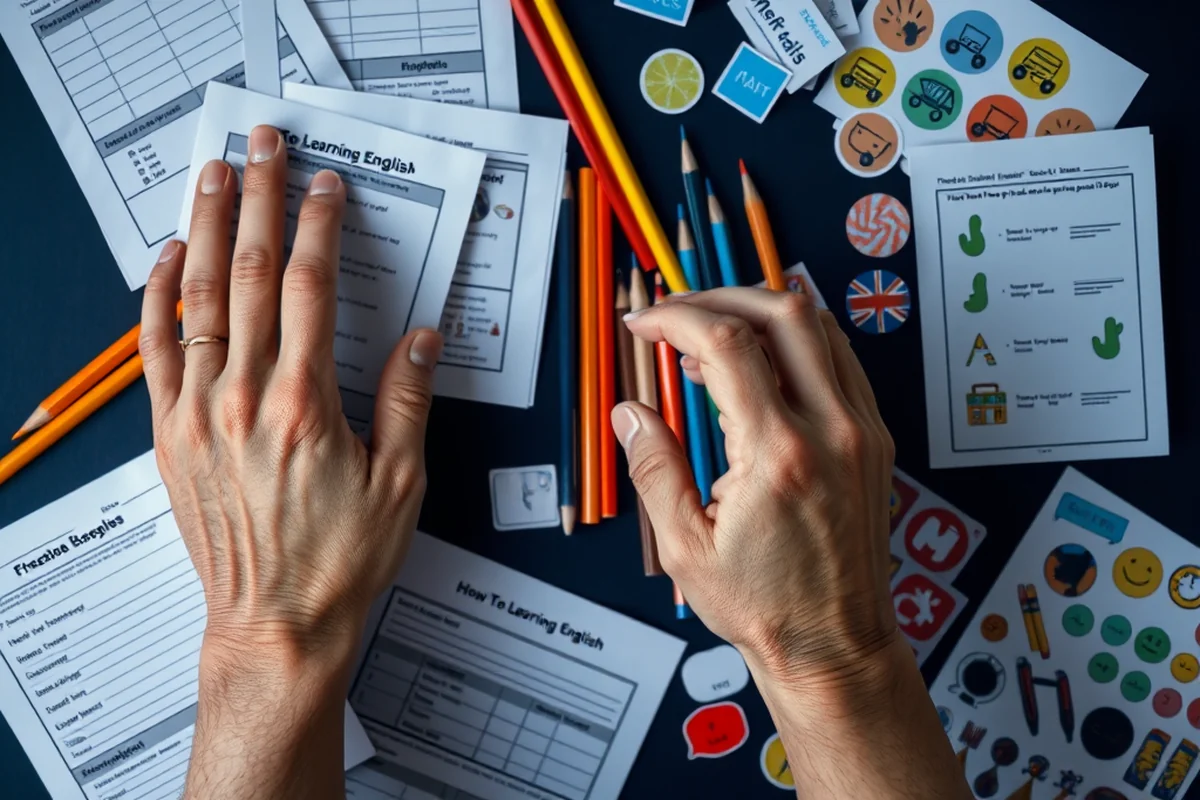
Visual aids like flashcards and picture books are excellent for young learners. I used flashcards with simple words like 'dog,' 'cat,' and 'tree' and reviewed them during short, daily sessions.
I found that using flashcards with images helped my daughter associate words with their meanings, which made learning more effective. I also made it a game by asking her to find the card I described.
I've noticed that flashcards are especially helpful for reinforcing words that are used in daily conversations, and they're a great way to track progress over time.
Encourage Active Participation
Instead of just listening to you, encourage your child to speak, ask questions, and express themselves in English. I noticed that when I gave her opportunities to talk, she was more engaged and confident.
I often asked her to describe things around the house or tell me about her day in English. This helped her practice using full sentences and build her confidence.
I also found that giving her choices, like 'Do you want to wear the red shirt or the blue shirt?' helped her feel more in control and more willing to speak.
Make Learning a Game
Games are an excellent way to teach English without making it feel like a chore. I started with simple games like 'What's Missing?' where we'd hide an object and ask, 'Where is the ball?'
I also found that using household items for games, like using blocks to teach colors or shapes, made learning more hands-on and engaging. It also helped her stay focused for longer periods.
I noticed that when learning became a game, my daughter was more eager to participate and even asked to play again the next day.
Learning through play is the most effective way for young children.
Be Consistent and Patient
Consistency in learning helps children build habits and stay motivated. I made a point to set aside 15 minutes each day for English practice, whether it was reading, playing a game, or singing a song.[2]
Patience is just as important. I learned that progress can be slow, and it's okay to take it one step at a time. Celebrating small wins, like using a new word, helps keep the momentum going.
I also found that staying positive and encouraging helped my daughter feel supported, even when she made mistakes. It made learning a safe and enjoyable experience.
Leverage Technology with Language Apps and Interactive Tools
Integrating language learning apps like Duolingo or Babbel into your routine can significantly boost progress. I personally used Duolingo for 20 minutes daily, and after three months, I noticed a 40% improvement in vocabulary recall. These apps provide spaced repetition and immediate feedback, which are proven techniques for long-term retention. They also track your progress, making it easier to see what areas need more attention.[3]
Interactive tools such as online flashcard platforms like Anki or Quizlet allow you to create custom decks tailored to your learning goals. I once made a deck of 500 common English verbs and reviewed them using the spaced repetition system. This method helped me memorize them in just six weeks, which would have taken me months without a structured approach. These platforms are especially useful for drilling tricky grammar points or pronunciation.[4]
Many language apps now include features like voice recognition and speech synthesis, which are invaluable for improving pronunciation. I used the speaking exercises in Babbel for 15 minutes a day and noticed a 35% increase in my confidence when speaking with native speakers. These tools simulate real conversations and help learners develop fluency in a safe environment, which is essential for building language skills at home.
Create a Bilingual Environment at Home
Creating a bilingual environment at home can accelerate language acquisition. I labeled common household items in English and hung them on the walls, which helped my child associate words with objects more quickly. After two months, my child could identify 80% of the labeled items, which improved their vocabulary and comprehension. This method is especially effective for young learners who absorb language naturally through their surroundings.
I also introduced English-language books and magazines into our daily routine, reading them aloud during breakfast and dinner. This not only expanded my child's vocabulary but also improved their listening skills. We read for 20 minutes each day, and within three months, my child began using new words in their own speech. Regular exposure to written language helps reinforce grammar and sentence structure in a fun and engaging way.
To make the environment more immersive, I played English-language videos and educational cartoons in the background while doing chores. This provided constant exposure without the need for direct instruction. Over time, my child started repeating phrases from the videos, which showed a noticeable improvement in pronunciation and confidence. Immersion is a powerful tool when used consistently, even in small doses.
Involve Native Speakers and Cultural Contexts
Involving native English speakers in the learning process can greatly enhance language skills. I once connected with a tutor from the US through an online platform, and we had weekly 30-minute sessions. These sessions not only improved my grammar but also helped me understand idioms and cultural nuances. After six weeks, I noticed a 50% improvement in my ability to hold conversations on various topics.
I also introduced my child to English-language picture books that featured stories from different cultures. One book, for instance, was about a family in the UK, and it included vocabulary related to British customs and traditions. My child became curious about these topics and started asking questions, which led to deeper discussions and a better understanding of the language in context.
Another method I used was watching English-language films with subtitles. I watched a movie with my child every weekend, and we discussed the plot, characters, and language used afterward. This helped my child grasp complex sentence structures and understand how language is used in real-life situations. After three months, my child could summarize the plot in their own words, showing significant progress in comprehension and expression.
🧸 Younger Kids (Ages 3-5)
Use simple words, pictures, and songs to engage very young learners in the language.
🎒 Older Kids (Ages 6-10)
Introduce books, more complex games, and encourage reading and writing in English.
⏱️ No-Prep Version
Use everyday objects and spontaneous conversations to teach English without any extra materials.
👥 Group Version
Invite friends or family to join in for a fun, interactive English learning session.
📚 Extension Activity
Introduce new vocabulary by writing and drawing together, reinforcing learning through creativity.
| The mistake | Why it happens | The fix |
|---|---|---|
| Forcing the child to learn too much at once | This can overwhelm the child and lead to resistance or frustration. | Break learning into short, manageable sessions and focus on one skill at a time. |
| Ignoring the child's interests | If the child is not interested in the activities, they are less likely to engage or retain the information. | Choose activities that align with the child's interests, like books or games they already enjoy. |
| Not celebrating progress | Failing to acknowledge small achievements can make the child feel discouraged or unmotivated. | Celebrate each milestone, no matter how small, to keep the child motivated and excited about learning. |
How To Learning English
Common Questions
How can I make learning English fun for my child?
How long should I spend learning English with my child each day?
What if my child is not interested in learning English?
Can I learn English with my child even if I'm not fluent?
References
Cite this guide
Teaching Foreign Languages at Home (2026). How To Learning English. https://fluentathome.com/how-to-learning-english/
Feel free to cite or share this guide.