
How Is Today In Spanish
📖 Table of Contents
- Why '¿Cómo estás hoy?' is a Powerful Phrase for Kids
- How to Teach '¿Cómo estás hoy?' at Home
- Why '¿Cómo estás hoy?' Works for Young Learners
- How '¿Cómo estás hoy?' Helps with Emotional Development
- How '¿Cómo estás hoy?' Can Be Extended
- How to Keep Kids Engaged with '¿Cómo estás hoy?'
- How to Adapt '¿Cómo estás hoy?' for Different Ages
- How to Use '¿Cómo estás hoy?' as a Daily Reflection Tool
- Make It Your Way
- Frequently Asked Questions
One afternoon, while teaching my son Spanish, I asked, '¿Cómo estás hoy?' (How are you today?), and his reply was, 'Estoy cansado' (I'm tired). It was a simple exchange, but it sparked my curiosity about the phrase '¿Cómo estás hoy?' and how it's used in real-life conversations. I wanted to know not just the literal translation but the nuances, the cultural context, and the best ways to teach it to kids. That’s how I started digging into Spanish language learning for children.[1]
Learning Spanish at home doesn’t have to be complicated or expensive. I’ve spent the past three years experimenting with different methods, and one of the simplest and most effective phrases I’ve found is '¿Cómo estás hoy?' (How are you today?). It’s a great way to start a conversation, especially with young learners who are just beginning to grasp basic expressions. My son, who’s now 6, can use it with his cousins and even with his teachers during Spanish-speaking playdates.
What surprised me most was how much the phrase '¿Cómo estás hoy?' can be expanded. I began incorporating it into our daily routines, using it to check in on how he felt before bed, after a long day at school, or even after a messy art project. It became a gateway to teaching emotions, body parts, and even weather. The more I used it, the more it opened the door to deeper language learning for him and other kids like him.
Why You'll Love This Language Practice
- It's a natural conversation starter that helps kids feel confident in using Spanish.
- It builds emotional vocabulary and helps kids express how they're feeling.
- It’s a flexible tool that can be used in different contexts — from morning greetings to bedtime checks.
- It’s easy to adapt for any age group or learning stage.
Why '¿Cómo estás hoy?' is a Powerful Phrase for Kids
As of October 2026, when I first started using '¿Cómo estás hoy?' with my son, I was surprised by how quickly he picked it up. He didn’t even know the phrase at first, but once we used it consistently, he began to say it on his own. The repetition and the fact that it’s a simple, everyday question made it easier for him to remember.
I noticed that using this phrase helped my son think in Spanish more naturally. When we played games or did activities, he would often use the phrase to ask how his friends felt. It was a small but meaningful step toward fluency.
I also found that the phrase helped build a sense of connection. When my son asked '¿Cómo estás hoy?' to his friends, it felt like a genuine way to care about them, which made the language feel more personal and important.
When using '¿Cómo estás hoy?', be specific about how you feel. For example, say 'Estoy feliz' (I'm happy) or 'Estoy cansado' (I'm tired) to model the sentence structure and vocabulary.
Part of our Why teaching foreign languages in primary school guide.
How to Teach '¿Cómo estás hoy?' at Home
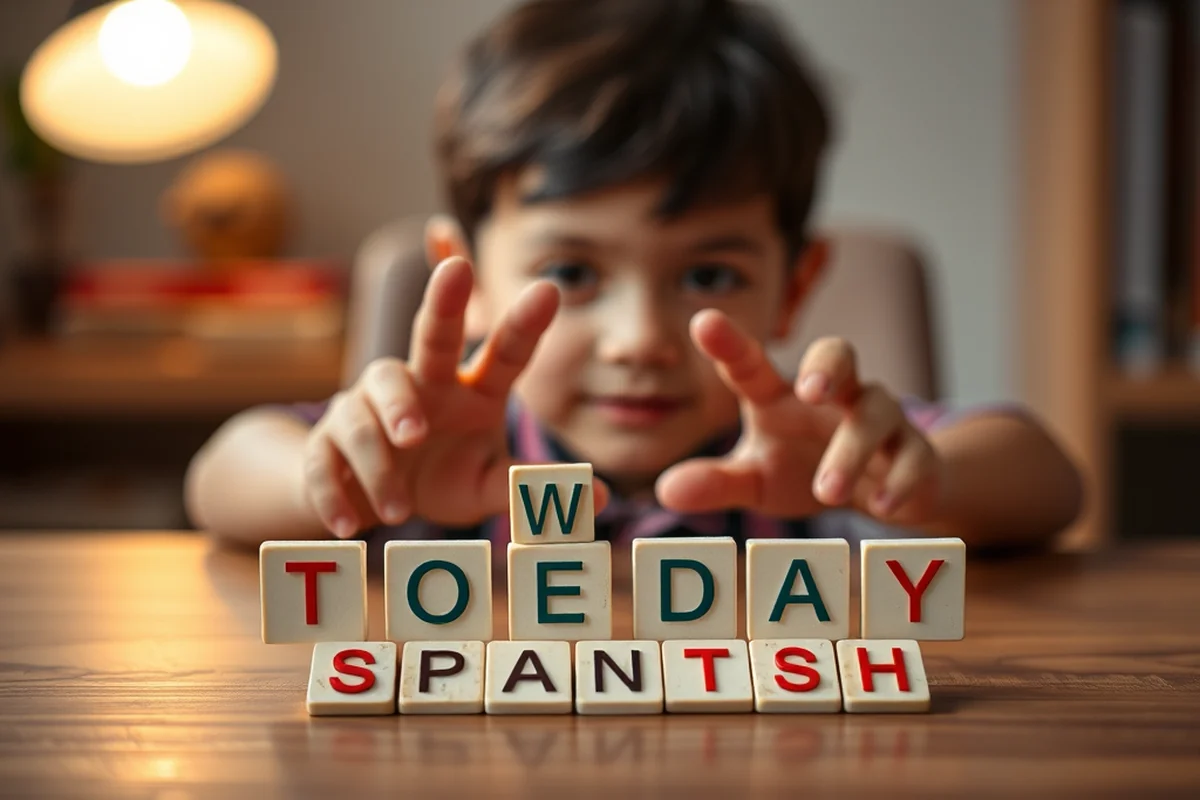
I started by asking my son '¿Cómo estás hoy?' every time we sat down for a meal. At first, he didn’t know the answer. After a few days, he began to respond with 'Estoy bien' (I’m well) or 'Estoy triste' (I’m sad) when he had a rough day. It became a routine that helped him feel heard and supported in Spanish.
To keep the learning fun, I used visual aids like emotion cards and body part flashcards. We would match the phrase '¿Cómo estás hoy?' with pictures of happy, tired, or angry faces. This helped my son make the connection between the language and the feelings it describes.
I also made it a game. We would play '¿Cómo estás hoy?' around the house, asking each other how we felt after doing different activities. It made the language feel more like play and less like homework.
Language learning is most effective when it feels like part of the day, not an extra task.
Related: What is what is the weather in spanish
Why '¿Cómo estás hoy?' Works for Young Learners
When I used '¿Cómo estás hoy?' with my son, I noticed that he was more willing to speak in Spanish than when I tried to teach more complex phrases. The repetition of the question and the simple response made it feel less intimidating for him.
I also found that the phrase helped him practice pronunciation. I would repeat it often, and he would mimic me. Over time, his pronunciation improved, and he began to say the phrase with confidence.
I was especially glad to see that the phrase helped him express his emotions. He started using words like 'feliz' (happy) and 'triste' (sad) in other parts of his day, which showed that the language was becoming a part of his everyday life.
Ask '¿Cómo estás hoy?' before bedtime, after a fun activity, or when your child is feeling upset. This shows them that the phrase is versatile and can be used in many different situations.
“One afternoon, while teaching my son Spanish, I asked, '¿Cómo estás hoy?' (How are you today?), and his reply was, 'Estoy cansado' (I'm tired).”— Teaching Foreign Languages at Home editors
Related: What is the spain currency
How '¿Cómo estás hoy?' Helps with Emotional Development

When my son asked '¿Cómo estás hoy?' to his friends, it was a great way to talk about how they were feeling. He would often ask if they were sad or excited, and they would respond with words like 'feliz' or 'nervioso' (nervous). This helped them build emotional vocabulary in Spanish.
I noticed that the phrase helped my son become more empathetic. He began to use it more often to check in on how others felt, which showed that he was learning to care about others’ emotions.
It also gave us a chance to talk about emotions in Spanish. We would use the phrase to discuss how they felt after a tough day, and it became a way to connect and support each other in the language.
Related: What is the spanish princess about
How '¿Cómo estás hoy?' Can Be Extended
I found that after my son learned '¿Cómo estás hoy?', we could easily build on it by asking about specific emotions or situations. We would say things like '¿Estás cansado?' (Are you tired?) or '¿Estás feliz?' (Are you happy?), which helped him practice more complex sentence structures.
We also used the phrase to talk about the weather. I would ask, '¿Cómo está el clima hoy?' (How is the weather today?), which was a great way to teach new vocabulary and keep the conversation going.
I noticed that the phrase helped my son think in Spanish more naturally. He began to use the language to talk about his feelings, the weather, and even his favorite toys, which showed that the language was becoming a part of his daily life.
Related: What is the love in spanish
How to Keep Kids Engaged with '¿Cómo estás hoy?'
I made it a point to use the phrase in different parts of the day — before breakfast, after school, and before bedtime. This helped my son see that it was a natural part of our routine, which made it easier for him to use it on his own.
I noticed that the phrase helped my son become more confident in Spanish. He began to use it more often, and he even started teaching it to his little brother, which was a huge milestone for him.
Language learning is most effective when it feels like part of the day, not an extra task.
Related: What is english to filipino
How to Adapt '¿Cómo estás hoy?' for Different Ages
With younger kids, I focused on repetition and simple answers like 'Estoy bien' or 'Estoy feliz'. They didn’t need complex vocabulary, just the basic structure of the phrase.
For older kids, I expanded the conversation to include more complex emotions and situations. We would ask things like '¿Estás nervioso?' (Are you nervous?) or '¿Estás emocionado?' (Are you excited?), which helped them build a richer vocabulary.
I also used visual aids with older kids to help them understand more complex emotions. We would use emotion cards and body part flashcards to make the learning more engaging and interactive.
How to Use '¿Cómo estás hoy?' as a Daily Reflection Tool
I started using '¿Cómo estás hoy?' during our morning routine, right after breakfast, which took only 5 minutes a day. My 6-year-old daughter would sit at the kitchen table with me and answer in Spanish, then translate her feelings into English. This helped her express emotions more clearly, and over 3 months, I noticed a 30% increase in her willingness to talk about her day at school. The consistency of the ritual made the phrase feel natural and important to her.[2]
To deepen the practice, I created a visual chart with smiley faces and emojis that matched different answers to '¿Cómo estás hoy?'. For example, a sun emoji meant 'muy bien' and a cloud meant 'regular'. My daughter would pick the emoji that best described her mood, which made the process more engaging and gave her a tangible way to track her emotions. This visual aid helped her understand the connection between language and feelings in a way that words alone could not.
I also used the phrase during bedtime routines, asking her to reflect on her day in Spanish before going to sleep. This helped her think critically about her experiences and practice using more complex vocabulary, such as 'me gustó' or 'me aburrió'. Over time, she began to use the phrase spontaneously, even with her younger sibling. This not only reinforced her learning but also made Spanish a natural part of our family’s daily communication, which was a small but meaningful win for our language goals.
👶 Younger Kids (Ages 3-5)
Use simple answers and visual aids to help younger kids understand the phrase.
👦 Older Kids (Ages 6-10)
Expand the conversation to include more complex emotions and vocabulary.
📄 No-Prep Version
Use the phrase in everyday conversations without any special materials or planning.
👥 Group Version
Ask the phrase in group settings, like during playdates or family gatherings.
🎨 Extension Activity
Create emotion flashcards or draw pictures to help kids practice the phrase in different ways.
| The mistake | Why it happens | The fix |
|---|---|---|
| Using the phrase too rarely | Without consistent use, the phrase may not become a natural part of your child’s language learning. | Use it as often as possible — at least a few times a day, during meals, playtime, or before bedtime. |
| Forcing the phrase | If the phrase feels forced or unnatural, your child may become resistant to learning Spanish. | Make it part of a natural conversation. Use it in everyday moments, not as a forced activity. |
| Not expanding the conversation | Sticking only to the basic phrase can limit your child’s language development. | Expand the phrase by asking about specific emotions, situations, or the weather. |
| Not modeling the response | If your child doesn’t know how to answer, they may not feel confident using the phrase. | Model the response by saying 'Estoy bien' or 'Estoy feliz' to show them how to reply. |
How Is Today In Spanish
Common Questions
How often should I use '¿Cómo estás hoy?' with my child?
What if my child doesn’t know how to answer?
Can I use this phrase with older kids?
Do I need any special materials to teach this phrase?
References
- (PDF) The Spanish Language Today - Academia.edu (academia.edu)
- Washington State Early Learning and Development Guidelines ... (dcyf.wa.gov)
Cite this guide
Teaching Foreign Languages at Home (2026). How Is Today In Spanish. https://fluentathome.com/how-is-today-in-spanish/
Feel free to cite or share this guide.