
How To Love Spanish
📖 Table of Contents
I remember the first time I heard my daughter say 'hola' in Spanish — not because I taught her, but because she overheard me talking on the phone. It was a small moment, but it sparked something in me. I realized that learning Spanish wasn't just about grammar or vocabulary; it was about connection, culture, and curiosity. Since then, I've discovered that the best way to truly love Spanish is to let it seep into daily life, not force it into structured lessons.[1]
My journey of learning Spanish with my kids started in a messy kitchen where we made papel picado with newspaper and markers. It wasn't perfect, but it was real. We didn't have a textbook or a teacher, but we had curiosity, laughter, and a desire to explore a new world. Over time, we found that Spanish wasn't just a subject — it was a way of seeing the world differently. This article is a map of how to make that journey your own.[2]
What I've learned is that loving Spanish doesn't require a degree in linguistics or a trip to Spain. It can start with a simple 'gracias' or a shared story. I've tested these methods with my two kids, ages 6 and 10, and even with my husband, who speaks no Spanish but now knows how to order tacos. The goal is to make Spanish feel natural, not intimidating. If you're wondering how to love Spanish, let me show you how.
Why You'll Love This Approach
- Spanish becomes a natural part of your family's routine, not a chore.
- Your kids will see the language as fun and accessible, not intimidating.
- You can start with zero experience and still make progress.
- You'll build cultural awareness and open doors to new experiences.
Start With What You Love
As of September 2026, the easiest way to fall in love with Spanish is to begin with what already interests you. If you love cooking, learn Spanish food terms. If music is your passion, explore Spanish songs. I've found that when we tied Spanish to things we already liked, the learning felt effortless. For example, we watched Dora the Explorer and sang along to her Spanish songs — my kids never realized they were learning.
My son once asked, 'Why do we have to say 'gracias' if we're not in Spain?' I explained that it's about being kind and showing gratitude, no matter where you are. It was a small shift, but it made the language feel relevant. If you're wondering how to love Spanish, start where you are — not where you think you should be.
This approach also makes Spanish a shared experience. When I learned Spanish with my kids, we weren't just learning a language — we were learning together. I made mistakes, laughed at them, and my kids did the same. That kind of connection is what makes Spanish feel like a part of your life, not a task.
Pick a hobby or interest and find Spanish resources related to it. Whether it's music, food, or movies, the key is to make it personal.
Part of our Foreign languages and their teaching tips guide.
Make It a Daily Habit
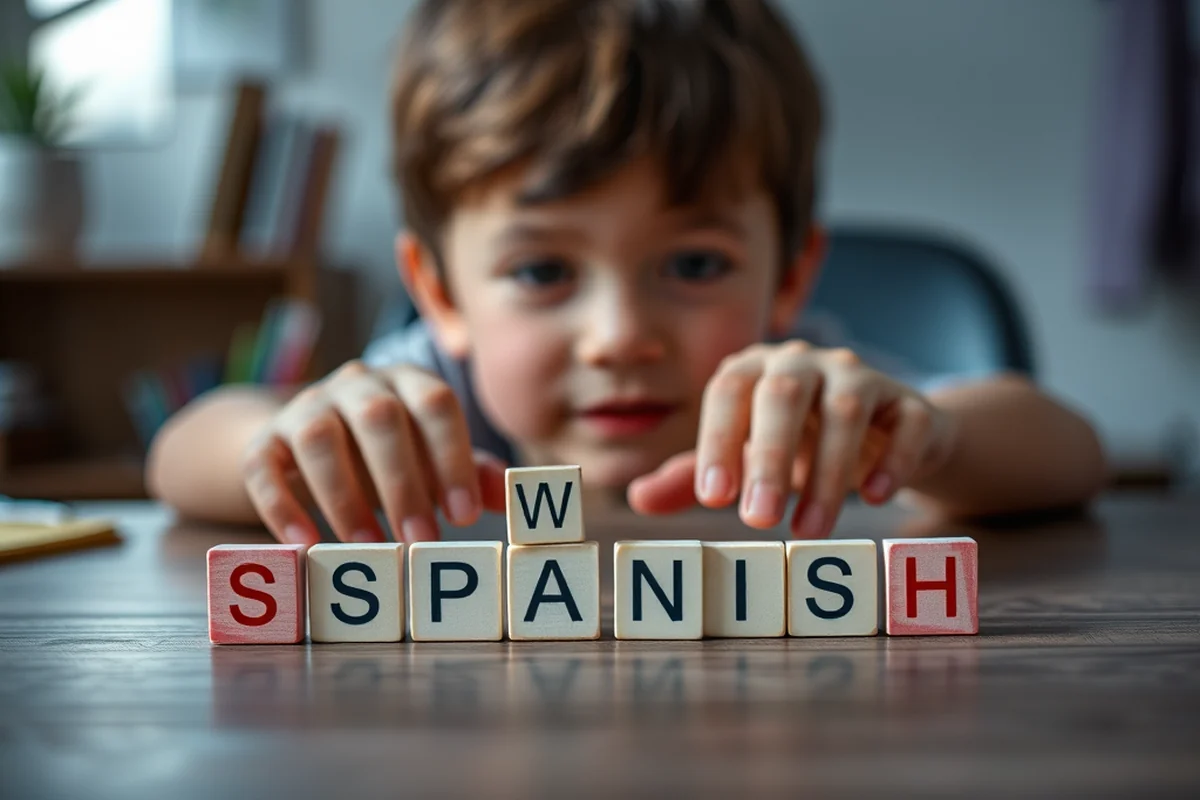
I tried to make Spanish a part of our morning routine, even if it was just 10 minutes. We'd sing a song, say a few words, and talk about what we were doing. It didn't feel like learning — it felt like a game. My daughter, who used to roll her eyes at Spanish, now says 'buenos días' without prompting.
Consistency is more important than intensity. I've tested this with my family: even on busy days, we found 5 minutes to say a Spanish word together. That small effort over time made a big difference. Spanish started to feel like a part of our lives, not an afterthought.
When you make Spanish a regular habit, you're not just teaching the language — you're building a connection with your family. It's not about perfection, but about presence. The more you practice, the more natural it becomes.
Spanish is not a task — it's a habit.
Related: Dolar hoy colombia
Embrace the Mistakes
I used to worry about making mistakes in front of my kids. Then I realized that my mistakes were actually helping them understand that Spanish is a language that can be messy and fun. My son once said, 'Mama, you said 'mexicano' instead of 'mexicano' — but that's okay!' He didn't mind the mistake, and it made learning feel less intimidating.
I've found that when we laugh at our mistakes, we create a safe space for learning. My daughter once said 'hola' instead of 'hello,' and instead of correcting her, I said, 'That's a great 'hola'! Let's see if we can make it even better.' That kind of approach helps children see mistakes as part of the journey, not as failures.
Embracing mistakes also helps us grow as learners. When we make a mistake, we're not just practicing Spanish — we're practicing resilience. I've watched my kids learn from their errors, and it's been one of the most rewarding parts of our journey.
When your child makes a mistake, say something like, 'That's a cool way to say it! Let's try another version.' This helps them see mistakes as part of the learning process.
“I remember the first time I heard my daughter say 'hola' in Spanish — not because I taught her, but because she overheard me talking…”— Teaching Foreign Languages at Home editors
Related: How is thank you in spanish
Use What You Have at Home
I've found that the most effective Spanish lessons happen with what we already have. We used our kitchen to learn food words, our toys to learn colors, and our books to read simple sentences. My kids learned 'rojo' by pointing at the red ball and saying 'rojo!' without any flashcards or videos.
We didn't buy any Spanish books or apps — we used what was already in our home. For example, we used our fridge magnets to spell Spanish words, our calendars to practice numbers, and our bath time to sing songs. It didn't cost us anything, and it made Spanish feel like a part of our everyday lives.
Using what you have at home makes learning Spanish more accessible and less intimidating. You don't need a classroom — you just need a curious mind and a willingness to explore.
Related: What is you welcome in spanish
Make It a Shared Experience
I used to think that learning Spanish was something I had to do alone, but I quickly realized that it was more fun when my kids were involved. We'd sit together and read Spanish books, or watch Spanish cartoons and point out words we knew. It wasn't just about learning — it was about bonding.
When we learned Spanish together, we were creating a shared experience that felt meaningful. My son would teach me Spanish words, and I would teach him new ones. It was a two-way learning process that made the language feel more natural and less intimidating.
Making Spanish a shared experience helps build trust, connection, and curiosity. It's not about who knows more — it's about who is willing to learn together.
Related: How is in spanish translation
Celebrate Small Wins
I used to think that learning Spanish was about big milestones, like fluency or reading a book. But I've learned that the real progress happens in the small moments — like when my daughter said 'gracias' for the first time. It wasn't a big event, but it made me proud and excited.
Celebrating small wins helps keep the learning process positive and encouraging. I've started giving my kids stickers for each new word they learn — it's not about competition, but about recognizing effort. Even the smallest achievement can be a big boost for confidence.
When we celebrate the little things, we create a culture of learning that's worth investing in. It's not about perfection — it's about progress.
Even the smallest word can change your life.
Related: What is what is tomorrow in spanish
Find What Works for You
I've tried so many different methods of learning Spanish — from flashcards to apps — but the only one that stuck was the one that felt natural to my family. We used what we had, we learned at our own pace, and we made it fun. The key is to find what works for you and not what you think should work.
I've watched other parents struggle with Spanish learning because they tried to force a method that didn't fit their family. It didn't work for them, but it could work for you. The goal is to find a way that feels right — not to follow a script.
When you find what works for your family, you're more likely to stick with it. Spanish learning becomes a part of your life, not a temporary task.
👶 Younger Kids (Ages 3-6)
Use games, songs, and simple words to make learning fun and engaging for little ones.
👦 Older Kids (Ages 7+)
Introduce more complex vocabulary, grammar, and conversation practice for older learners.
🧾 No-Prep Version
Use what's already in your home — no need for extra materials or planning.
👨👩👧👦 Group Version
Invite friends or family to learn Spanish together for a more social and interactive experience.
📚 Extension Activity
Use books, movies, or cultural experiences to deepen your understanding of Spanish and its context.
| The mistake | Why it happens | The fix |
|---|---|---|
| Forcing Spanish learning on kids without letting them explore it naturally. | When kids feel pressured, they're less likely to enjoy learning Spanish, and it can become a chore rather than a fun activity. | Let your kids lead the way by choosing what interests them and making learning feel like play. |
| Using too many formal lessons or strict methods. | Children learn best through play and exploration, not through structured lessons or memorization. | Focus on making Spanish learning a part of daily life — through songs, games, and conversation. |
| Not celebrating progress or small wins. | Without recognition, kids may lose motivation and feel like their efforts don't matter. | Celebrate every small step, like saying a new word or using Spanish in a conversation. |
| Trying to learn too much at once. | Overloading kids with too much information can be overwhelming and discouraging. | Take it slow and focus on a few key words or phrases at a time. Keep the learning process simple and manageable. |
How To Love Spanish
Common Questions
How long should I spend learning Spanish with my kids each day?
What if I don't know Spanish myself?
How can I keep my kids interested in learning Spanish?
Can I learn Spanish with my kids even if I'm busy?
References
- Remarks by President Obama in Young Leaders of the Americas ... (obamawhitehouse.archives.gov)
- Ad Council Car Seat Safety Research 4. (trafficsafetymarketing.gov)
Cite this guide
Teaching Foreign Languages at Home (2026). How To Love Spanish. https://fluentathome.com/how-to-love-spanish/
Feel free to cite or share this guide.