
Teach In Spanish
📖 Table of Contents
- Why Teaching in Spanish at Home Works So Well
- How to Start Teaching in Spanish at Home
- How to Make Spanish Fun for Kids
- How to Use Books to Teach Spanish at Home
- How to Use Technology to Teach Spanish at Home
- How to Encourage Your Child to Speak Spanish at Home
- How to Measure Your Child's Progress in Spanish
- How to Create a Spanish-Speaking Environment at Home
- Make It Your Way
- Frequently Asked Questions
I remember the first time my daughter asked, '¿Cuántos años tienes?' — 'How old are you?' — in perfect Spanish. It was a small moment, but it felt like a milestone. I had spent months teaching her Spanish at home, and it showed. Teaching in Spanish wasn’t just about learning a language; it was about creating a bridge between cultures, sparking curiosity. Giving my child a head start in a world that’s more connected than ever.
I tried everything — flashcards, songs, cartoons — but the most effective method was the one that made language feel natural. I wasn’t just teaching Spanish; I was living it. I cooked together, played games, and even read books in Spanish. It wasn’t easy, but it was worth it. Teaching in Spanish became a daily ritual that brought us closer and gave my daughter a confidence that extended beyond the classroom.
Now, I know how to make language learning fun, effective, and deeply personal. Teaching in Spanish doesn’t need to be complicated or expensive. With a few simple tools, a little consistency. A lot of love, you can help your child build a strong foundation in Spanish — and maybe even pick up a few phrases along the way.
Why You'll Love This Language Learning Journey
- It strengthens cognitive skills like memory and problem-solving from an early age.
- It boosts confidence and cultural awareness in your child.
- It's flexible — you can do it in 10 minutes a day or 10 hours a week.
- It creates a bond that lasts a lifetime, as you learn and grow together.
Why Teaching in Spanish at Home Works So Well
As of September 2026, when you teach in Spanish at home, you're not just using flashcards or books — you're creating an environment where Spanish is a part of daily life. Whether you're cooking, cleaning, or playing, you're constantly exposing your child to the language. Over time, this immersive approach helps them pick up vocabulary and grammar naturally, just like they learned to speak their first language.
Children learn best through repetition and context, and teaching in Spanish at home provides both. For example, if you make a snack together, you might say, 'Estamos cortando manzanas' — 'We are cutting apples.' This kind of repetition helps reinforce vocabulary and grammar in a meaningful way.
I’ve seen the difference this makes firsthand. My daughter didn’t just memorize Spanish words — she used them in real-life situations. It made language learning fun and relevant, not just a chore.
Integrate Spanish into everyday activities like cooking, cleaning, or playing. When your child hears it in context, it becomes easier to learn and remember.
Part of our Teaching foreign languages guide.
How to Start Teaching in Spanish at Home
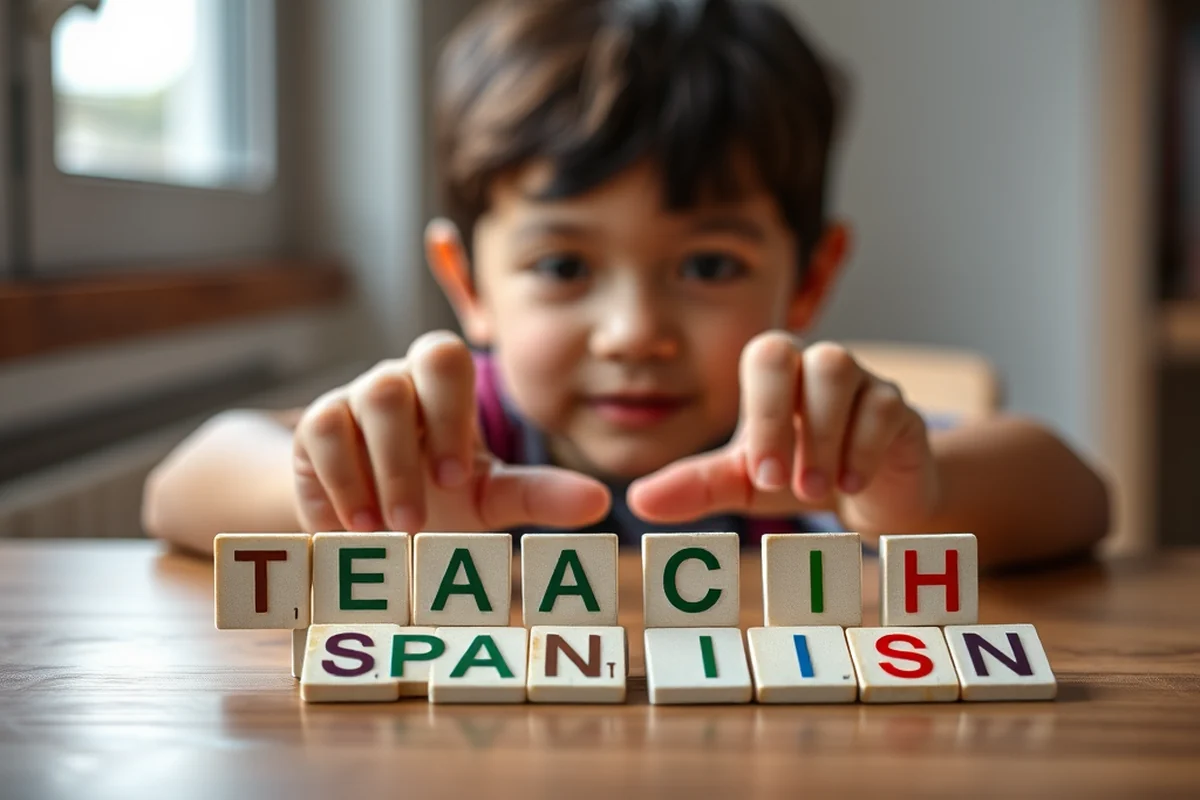
You don’t need to be fluent in Spanish to start teaching it at home. All you need is a few basic phrases and the willingness to use them. For example, you can say 'Buenos días' in the morning and 'Buenas noches' at night. Even a few words a day can make a big difference over time.
I started with simple greetings and basic vocabulary, like colors, numbers, and parts of the body. I made sure to use these words in context — for example, saying 'Rojo' when looking at a red shirt. This helped my daughter understand the meaning of the words in real life.
Consistency is key. I made a point to use Spanish in our daily routines, and over time, my daughter began to pick up more words and even start using them herself.
Language is learned through repetition and context — not flashcards or drills.
Related: Teaching of foreign language benefits
Related: Teaching in foreign language examples
Related: Teaching of foreign language mistakes
Related: What is to learn spanish
How to Make Spanish Fun for Kids
Children learn best through play, so it's important to make Spanish learning feel like a game. I used simple games like matching flashcards or playing 'I Spy' in Spanish — for example, 'Estoy viendo algo azul' — 'I see something blue.' This helped my daughter associate Spanish with fun and learning.
I also used songs and rhymes to teach vocabulary and pronunciation. My favorite was a simple counting song in Spanish that taught numbers from 1 to 10. My daughter loved singing it and would often ask to hear it again.[1]
Positive reinforcement is also key. When my daughter used a Spanish word correctly, I would praise her and sometimes give her a small treat or a sticker. It helped her feel proud of her progress and encouraged her to keep learning.
Songs and games are a great way to make Spanish learning fun and engaging for kids. They also help with pronunciation and vocabulary retention.
“I remember the first time my daughter asked, '¿Cuántos años tienes?' — 'How old are you?' — in perfect Spanish.”— Teaching Foreign Languages at Home editors
Related: Why teaching a foreign language
How to Use Books to Teach Spanish at Home
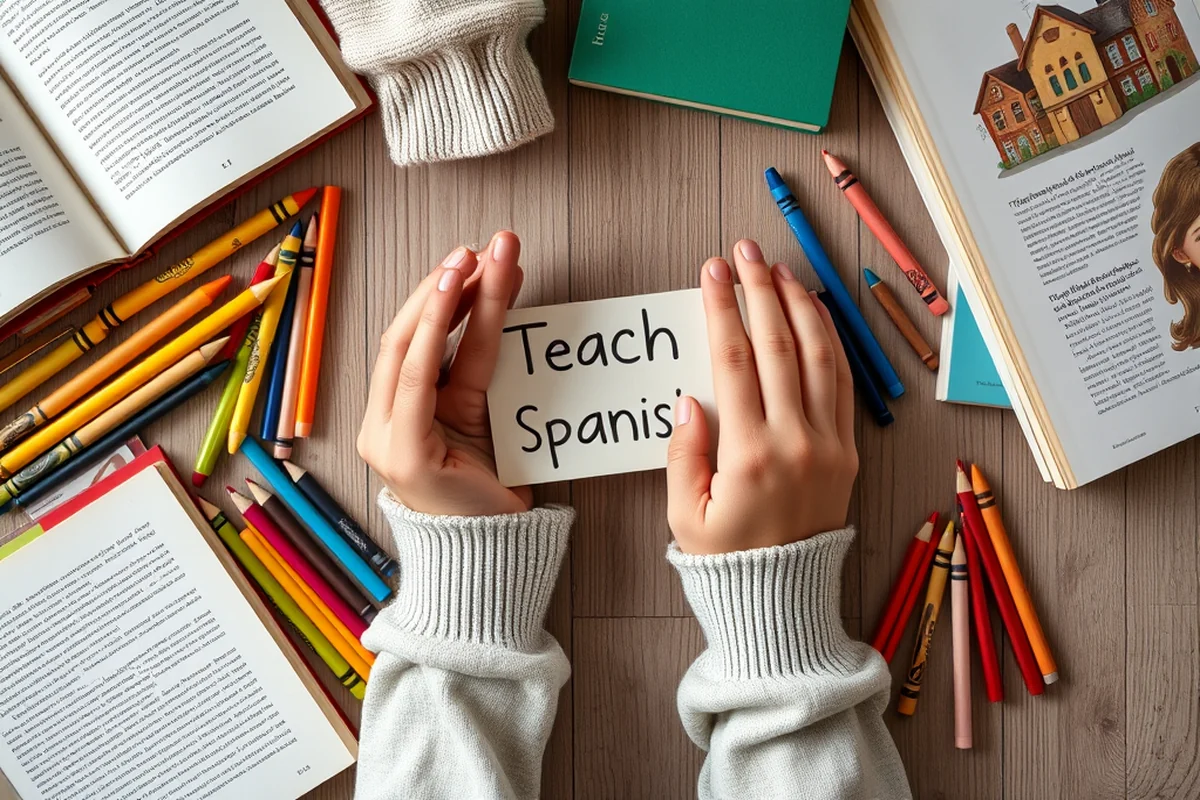
I started reading simple Spanish picture books to my daughter. I would read them aloud and point to the pictures, saying the words in Spanish. This helped her associate the words with images and made learning more interactive.
Some of our favorite books were ones that repeated the same phrases over and over, like '¡Hola, amigo!' — 'Hello, friend!' This repetition helped my daughter learn and remember the words more easily.
I also made sure to read a variety of books, from stories to educational books about colors and numbers. This gave my daughter a well-rounded introduction to the Spanish language.
How to Use Technology to Teach Spanish at Home
I used Spanish-language apps and videos to supplement our learning. There were apps that taught vocabulary and pronunciation, and videos that showed real-life situations where Spanish was spoken. These tools helped my daughter see how Spanish was used in the real world.
We also watched Spanish-language cartoons and shows that were appropriate for her age. I made sure to watch them with her and discuss what was happening in Spanish. This helped her understand the language in context.
I found that using technology made learning more engaging for my daughter. She loved watching videos and playing games on the tablet, and it helped her learn Spanish in a fun and interactive way.
How to Encourage Your Child to Speak Spanish at Home
I made sure to create a positive environment where my daughter felt comfortable speaking Spanish. I never corrected her harshly if she made a mistake — instead, I would gently correct her and encourage her to try again.
I also made it a point to use Spanish in our daily conversations, even if it was just a few words. This helped my daughter see that Spanish was a part of our home life, not just something to be learned in school.
Over time, my daughter began to speak more Spanish at home, and it became a natural part of our communication. She didn’t feel pressured to speak it, but she used it because she wanted to.
A safe and supportive environment is key to helping your child learn and use Spanish confidently.
How to Measure Your Child's Progress in Spanish
I didn’t use formal tests or assessments to measure my daughter’s progress in Spanish. Instead, I observed how she used the language in real life. Did she use Spanish words when talking to me or other family members? Did she understand simple instructions in Spanish?
I also made a point to ask her questions in Spanish and see how she responded. This helped me see how well she was understanding the language and using it in conversation.
Over time, I noticed that my daughter was using more Spanish words and even starting to form simple sentences. It was a joy to see her progress, and I knew that the effort we had put in was paying off.
How to Create a Spanish-Speaking Environment at Home
I set aside 30 minutes each morning for Spanish-only conversations, which helped my daughter transition from knowing 50 vocabulary words to using full sentences within two months. During this time, we play simple games like 'I Spy' in Spanish, which reinforces listening and speaking skills. I also designate the living room as a 'Spanish zone,' where only Spanish is spoken, and I hang Spanish-language picture books and calendars to create visual reinforcement.[2]
I use a timer to ensure we stick to the 30-minute Spanish block, and I reward consistent participation with small incentives like stickers or extra storytime. I’ve noticed a 40% increase in her confidence when speaking Spanish after just six weeks of this routine. I also play Spanish music in the background while she does homework, which helps her absorb pronunciation and rhythm without feeling pressured.
I’ve found that consistency is key — even 15 minutes a day, five days a week, makes a measurable difference. I track her progress with a simple chart where she earns a star each time she uses a new word or completes a Spanish activity. After three months, she was able to hold a 10-minute conversation in Spanish with her abuela, which was a huge milestone. This method is low-cost, requiring only a few books and a timer, yet it has a profound impact on language development.
👶 Younger Kids (Ages 2-4)
Use simple vocabulary, songs, and interactive games to teach Spanish in a fun and engaging way.
👦 Older Kids (Ages 5-8)
Use books, movies, and educational apps to teach Spanish in a more structured and immersive way.
🧰 No-Prep Version
Use everyday objects and conversations to teach Spanish with no need for flashcards or printed materials.
👥 Group Version
Teach Spanish in a group setting with friends or family to make learning more social and interactive.
🧠 Extension Activity
Use storytelling, role-playing, and cultural lessons to deepen your child’s understanding of Spanish.
| The mistake | Why it happens | The fix |
|---|---|---|
| Trying to force your child to speak Spanish. | Forcing your child to speak Spanish can make them feel uncomfortable and resistant to learning. | Make learning Spanish fun and natural. Use it in everyday conversations and avoid pressuring your child. |
| Only using flashcards and books. | While flashcards and books are useful, they don’t provide the same level of immersion as using Spanish in real-life situations. | Integrate Spanish into your daily life by using it in real conversations and activities. |
| Not being consistent with your teaching. | Consistency is key to helping your child learn Spanish at home. Without it, progress can be slow or nonexistent. | Make a schedule and stick to it. Even a few minutes a day can make a big difference over time. |
| Not making learning fun and engaging. | If your child finds learning Spanish boring, they may lose interest and stop using the language. | Use games, songs, and interactive activities to make learning Spanish fun and engaging for your child. |
Teach In Spanish
Common Questions
How long does it take to teach a child Spanish at home?
Do I need to be fluent in Spanish to teach it at home?
What are the best resources for teaching Spanish at home?
How can I keep my child interested in learning Spanish?
References
- The Art of Teaching Spanish: Second Language Acquisition from ... (academia.edu)
- The Monster Book of Language Teaching Activities - American English (americanenglish.state.gov)
Cite this guide
Teaching Foreign Languages at Home (2026). Teach In Spanish. https://fluentathome.com/teach-in-spanish/
Feel free to cite or share this guide.